What to Check Before Buying LED Lighting Wholesale
The real risk in LED lighting wholesale is not paying too much. It is buying a cheap batch that fails safety checks, shifts color between orders, burns drivers early, or arrives without the documents your contractor, distributor, or inspector needs.
The Wholesale LED Lighting Trap Nobody Puts on the Quote Sheet
Price lies quietly.
I have seen buyers celebrate a beautiful LED lighting wholesale price on Monday, then spend the next six months explaining flicker complaints, mismatched CCT, weak cartons, missing IES files, and a warranty process that somehow requires twelve photos, three videos, and a spreadsheet before anyone admits the driver failed.
So what did they really save?
The hard truth is simple: in wholesale LED lights, the lowest unit price is often just a delayed invoice. You pay later through returns, rework, project delays, angry distributors, and damaged reputation. That is why serious buyers should not ask, “How cheap can you make it?” first. They should ask, “Can this supplier repeat the same product, with the same performance, across 500 units, 5,000 units, and the reorder after that?”
LEDs can save real energy. The U.S. Department of Energy says residential ENERGY STAR-rated LEDs use at least 75% less energy and last up to 25 times longer than incandescent lighting, while LED adoption could save more than 569 TWh annually in the U.S. by 2035, according to its LED lighting efficiency data. That is the upside.
The downside? Bad suppliers know buyers love those numbers. They use LED efficiency as a sales shield while hiding weak thermal design, loose BOM control, exaggerated lifetime claims, and vague certification language.
If you plan to buy LED lights in bulk, treat the purchase like a technical audit, not a shopping trip.
Start With the Supplier, Not the Fixture
A good LED lighting supplier is not just a factory with a catalog. It is a risk-control partner.
For commercial LED lighting wholesale, I want to know whether the supplier understands project documents, distributor reorders, compliance pathways, batch traceability, packaging stress, and real installation conditions. A pretty downlight sample in a showroom tells me almost nothing. A full submittal pack tells me much more.
This is where a manufacturer’s structure matters. A buyer looking for repeatable project supply should study whether the company presents itself as a commercial LED lighting manufacturer rather than only a product trader. The difference is not academic. Traders can be useful, but when batch problems appear, they often have limited control over LED chip bins, drivers, optics, aluminum housings, tooling revisions, and aging-test records.
Ask these questions before discussing bulk LED lighting prices:
Does the supplier control the BOM version?
Can they freeze LED chip brand, driver model, lens material, housing finish, and CCT bin?
Can they provide IES/LDT files, spec sheets, wiring diagrams, and packaging marks?
Do they support OEM labels, private-label cartons, barcode rules, and market-specific documentation?
Can they separate sample quality from mass-production quality with signed golden samples?
I know that sounds demanding.
Good.
If a supplier gets annoyed by basic technical questions, imagine how they will behave after a container arrives with 8% driver failure.
Check the Documents Before You Trust the Lumens
The lighting industry has a long history of inflated claims. That is not my opinion; it is public record.
In 2014, the Federal Trade Commission announced a court order against Lights of America and its owners, including a $21 million judgment, after claims that LED bulb light output and lifetime were exaggerated. The FTC said some claimed 30,000-hour lamps had supporting data showing tested bulbs lasted only a few thousand hours, according to the agency’s misleading LED light bulb claims case.
That case should live rent-free in every buyer’s head.
When an LED lighting distributor sees “50,000 hours” on a spec sheet, the next question should be: based on what? LM-80? TM-21? Driver lifetime? Ambient temperature? LED package only? Whole luminaire? At Ta 25°C, Ta 40°C, or Ta 50°C?
For professional sourcing, I would ask for:
Document / Data Point
What It Proves
What Can Go Wrong If Missing
LM-79 report
Total lumens, wattage, efficacy, CCT, CRI, beam angle, electrical data
Supplier may overstate lumen output or hide poor efficiency
LM-80 + TM-21 data
LED package lumen maintenance projection
“50,000 hours” may be marketing, not engineering
IES/LDT files
Photometric distribution for DIALux, AGi32, Relux, or project layouts
Lighting design may fail on-site lux levels or glare targets
Driver datasheet
PF, THD, flicker, dimming type, surge rating, operating temperature
Flicker, early driver death, poor dimming, failed inspections
Safety certification path
UL, ETL, CE, CB, ENEC, or market-specific compliance support
The DesignLights Consortium also states that SSL applications require test results from accredited laboratories and references LM-79, LM-80, LM-84, ISTMT, and related test methods in its solid-state lighting testing lab requirements. That matters because many buyers still accept PDFs without checking who issued them.
Don’t just collect documents.
Interrogate them.
A real LM-79 report should match the exact model, wattage, CCT, optics, and driver configuration you are buying. If the supplier sends a 3000K report for a 4000K order, or a 30W report for a 40W model, ask why. If the report shows 110 lm/W but the quote sheet promises 145 lm/W, ask louder.
The Safety Problem Is Not Theoretical
LED lighting failures are not rare little rumors passed around trade shows. They are documented.
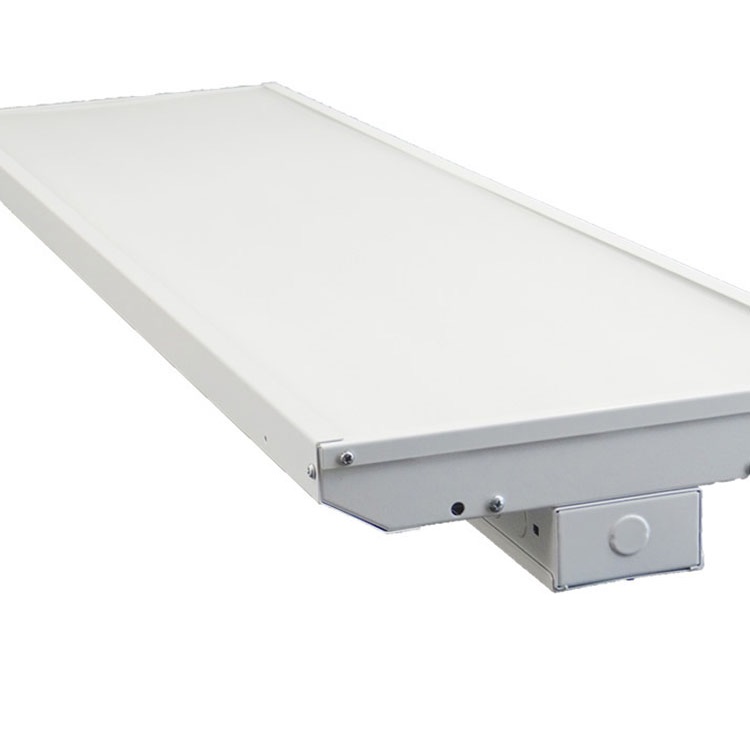
In July 2024, the U.S. Consumer Product Safety Commission announced that Best Lighting Products recalled about 710,600 LED high bay fixtures in the U.S., plus about 19,100 in Canada, because plastic pins securing the energized LED board could degrade and create a fire hazard. The affected LEDFHB models ranged from 90W to 425W and were sold through distributors from May 2017 through May 2024 for $60 to $180, according to the CPSC high bay LED fixture recall.
Then came another reminder.
In December 2024, CPSC announced NetZero USA recalled about 16,000 high bay LED fixtures because degraded plastic pins could allow the electrically charged LED board to come loose, with seven reports of loose LED boards burning. Those fixtures were sold from August 2018 through October 2024 for $100 to $415, according to the NetZero USA high bay LED fixture recall.
That is why I care about boring parts.
Plastic pins. Screw torque. PCB clearance. Lens temperature. Surge protection. Terminal block rating. Heat sink mass. Driver potting. Strain relief. Grounding continuity. These are not small details when a fixture is installed above merchandise, workers, hotel corridors, warehouse racks, or a restaurant ceiling.
The Wholesale LED Lighting Price Should Be Dissected Like a Crime Scene
A cheap LED lighting wholesale price usually comes from somewhere.
Maybe the factory used a lower-bin LED chip. Maybe the aluminum body is 15% lighter. Maybe the driver capacitor is rated 85°C instead of 105°C. Maybe surge protection was removed. Maybe the diffuser yellows faster. Maybe the supplier quoted EXW and left you to discover freight, duty, testing, relabeling, and replacement stock later.
I hate vague quotes.
A useful quote for bulk LED lighting should show:
Unit price by MOQ tier: 100 pcs, 500 pcs, 1,000 pcs, 5,000 pcs
Carton dimensions, gross weight, and drop-test details
Certification and document availability by target market
Here is my blunt rule: if two suppliers quote the same 30W commercial downlight and one is 22% cheaper, assume the difference is hidden in the driver, aluminum, optics, testing time, packaging, or after-sales support until proven otherwise.
Could the cheaper supplier still be good?
Yes.
But make them prove it with data, samples, teardown photos, and batch-control documents.
MOQ, Lead Time, and Batch Drift: The Three Quiet Killers
MOQ is not just a purchasing number. It tells you how flexible the factory is and how painful your inventory risk may become.
For a LED lighting distributor, a 500-piece MOQ per SKU can be reasonable for stable sellers. But if the factory demands 500 pieces per CCT, per beam angle, per housing color, per driver type, your “mixed order” can suddenly become a warehouse problem. Commercial LED lighting wholesale is not only about price; it is about SKU architecture.
Then there is lead time.
A quoted 15–20 days can be realistic for regular models after sample approval, especially when the supplier already has materials and tooling aligned. But custom optics, private-label cartons, DALI drivers, 90+ CRI, special finishes, or market-specific labels can push production. That is why I like suppliers with visible OEM/ODM LED lighting factory support and project-document workflows, not just a “send inquiry” button.
Batch drift is the nastiest problem because it hides until the second or third order.
The first order looks fine. The reorder arrives with a slightly greener 4000K, a different diffuser texture, a weaker spring clip, or a driver that dims badly below 20%. Nobody at the factory “changed” anything, of course. They just “optimized supply chain.”
I have heard that sentence too many times.
Lock the BOM. Sign the sample. Put change-control terms in writing. Require approval before any substitution of LED chip, driver, lens, housing, finish, cable, terminal, or packaging. If the supplier refuses, they are not ready for serious LED Lighting Wholesale.
Tariffs, Country of Origin, and the Real Landed Cost
If you sell into the U.S. or Europe, landed cost is not the same as factory price.
Reuters reported in January 2025 that Signify, one of the world’s largest lighting companies, said its Chinese imports were less than 20% of what it imports into its U.S. business and that it could respond to possible U.S. tariffs through footprint changes and price increases. Its CEO also noted that some components from China remain highly efficient to source even with tariffs, according to Reuters coverage of Signify and U.S. tariff exposure.
That is the mature view.
China is still strong in LED components, drivers, aluminum processing, optics, assembly speed, and supplier networks. But buyers must calculate duty codes, Section 301 exposure where applicable, anti-dumping risk, customs classification, freight volatility, certification costs, and local relabeling. A quote that ignores these costs is not a quote. It is bait.
Before paying a deposit, ask your freight forwarder or customs broker to confirm HS code treatment for your actual fixture type. A recessed downlight, LED strip, track head, panel light, high bay, and driver may not be treated the same in every market.
What I Would Check Before Sending the Deposit
If I were buying from a new LED lighting supplier, I would run a tight pre-order audit.
First, I would request a sample from the same production path as the mass order, not a handmade showroom unit. Then I would ask for the full technical pack: spec sheet, IES/LDT, LM-79 where available, driver datasheet, installation sheet, label draft, carton mark, and warranty terms. A supplier with a proper LED lighting IES files and LM-79 reports resource workflow makes this process much less painful.
Then I would test the sample.
Not casually. I would check wattage, PF, CCT, CRI, flicker, dimming behavior, surface temperature, beam quality, glare, mechanical fit, spring strength, connector quality, and packaging resistance. For commercial fixtures, I would also look for 0-10V or DALI compatibility, surge protection such as 1kV/2kV/4kV depending on application, and realistic ambient temperature limits.
Finally, I would review the supplier’s project history. If they show commercial LED lighting projects and case studies, I would look for application fit: retail, office, hospitality, warehouse, outdoor, or chain rollout. A factory that understands nail salon lighting may not automatically understand warehouse high bays. A supplier good at decorative ceiling lights may not be good at DLC-oriented industrial fixtures.
Specificity wins.
The Buyer’s Red-Flag List
Some red flags are obvious. Others wear a nice suit.
Run if you see these:
“CE certified” with no test report, no DoC, no lab name, and no model match
“UL standard” wording that does not mean UL listed, ETL listed, or NRTL certified
50,000-hour lifetime with no LM-80/TM-21 basis
“Same as Philips driver” but no driver brand or datasheet
CRI 90 promised, but sample measures Ra82 or has weak R9
One IES file used across multiple wattages and beam angles
No written rule for BOM substitution
No carton drop-test thinking for bulk LED lighting shipments
Warranty terms that require shipping failed products back at buyer cost
Quote changes after sample approval without technical reason
A serious LED lighting distributor should also check packaging. I know packaging feels unglamorous. But cracked lenses, bent trims, scraped housings, and compressed cartons destroy profit before the fixture is even installed.
The Specification Checklist for LED Lighting Wholesale Buyers
Use this before placing your wholesale order.
Category
Minimum Check
Better Standard
Why It Matters
Light output
Lumens tested, not guessed
LM-79 report for exact SKU
Prevents inflated brightness claims
Color quality
CRI Ra80 minimum
CRI Ra90, R9 data for retail, salon, hospitality
Protects skin tone, merchandise color, and visual comfort
Color consistency
Basic CCT range
3-step SDCM or defined binning
Reduces visible mismatch across rooms
Driver
Generic driver
Named driver, PF >0.9, THD <20%, flicker data
Reduces failures and complaints
Thermal design
Aluminum body claimed
Temperature data at Tc point and ambient rating
Protects LED and driver life
Dimming
“Dimmable” stated
Tested with TRIAC, 0-10V, or DALI-2 control list
Avoids flicker and low-end dropout
Safety
Verbal certification
UL/ETL/CE/CB documents matched to model
Supports inspections and legal selling
Packaging
Export carton
Drop-tested carton, foam protection, pallet plan
Reduces freight damage
Warranty
Years only
Written claim process, parts policy, failure threshold
Prevents after-sales arguments
Reorder control
Same model name
Locked BOM and change approval
Stops batch drift
FAQs
What should I check before buying LED lighting wholesale?
Before buying LED lighting wholesale, check verified photometric data, safety certification, driver quality, thermal design, MOQ terms, warranty process, lead time, packaging strength, and whether the supplier can repeat the same CCT, CRI, beam angle, and housing finish across batches. After that, request samples and compare them against the final quote. Never approve mass production from catalog claims alone.
What documents should a LED lighting supplier provide?
An LED lighting supplier should provide spec sheets, IES or LDT files, LM-79 reports where available, driver datasheets, wiring diagrams, CE/RoHS or UL-related documentation by market, warranty terms, product labels, carton markings, and a production sample approval record before mass production. For OEM or private-label orders, also require artwork proofs, barcode rules, and BOM control terms.
Is the lowest LED lighting wholesale price a bad sign?
The lowest LED lighting wholesale price is risky when it comes from weaker drivers, undersized aluminum heat sinks, unverified lumen claims, thin packaging, vague warranties, or factories that change LED chips and BOM versions without written approval during repeat orders. Low price is not automatically bad, but unexplained low price is dangerous. Ask what changed.
How do I compare two wholesale LED lights from different suppliers?
To compare two wholesale LED lights, normalize wattage, lumens, efficacy, CCT, CRI, beam angle, driver type, dimming protocol, housing material, certification, warranty, MOQ, lead time, packaging, freight terms, and replacement policy before judging price. If the two offers do not match technically, you are not comparing suppliers. You are comparing two different products.
What is the biggest mistake buyers make with bulk LED lighting?
The biggest mistake in bulk LED lighting is approving a polished sample without locking the mass-production BOM, test data, packaging, certification path, and written substitution rules. Many failures start after sample approval, when the factory silently changes drivers, LED bins, lens material, or carton protection. Treat the sample as evidence, not a promise.
Your Next Steps: Buy the Data Before You Buy the Container
Do not ask for the cheapest quote first.
Ask for the proof first.
Send your target wattage, CCT, CRI, beam angle, application, market, certification needs, MOQ, packaging rules, and expected reorder schedule. Then demand the documents: spec sheet, IES/LDT, LM-79 where available, driver data, warranty terms, and BOM-control commitment. Only after that should you negotiate LED lighting wholesale price.
If a supplier can answer clearly, test honestly, and support repeat orders, keep talking.
If they hide behind “don’t worry, our quality is very good,” walk away.