Where to Use Anti-Glare LED Downlights in Commercial Spaces
A blunt, field-tested guide to using commercial LED downlights where they actually improve comfort, sales, safety, and energy performance — and where they quietly ruin a space.
The Ugly Truth: Most “Bright” Commercial Lighting Is Just Expensive Glare
Glare sells lies.
When a contractor walks into a finished office, retail store, clinic, or hotel corridor and says, “It’s bright enough,” I immediately look at the ceiling angle, desk reflections, wall luminance, and the faces of people sitting under the fixtures, because bad commercial LED downlights usually pass a lux-meter test while failing the people who have to live under them for eight hours.
So what did the project really buy?
I have seen this mistake too many times: cheap recessed cans, high-output chips, shallow reflectors, no cutoff control, and a client who thinks the job is done because the floor reads 500 lux. But the receptionist is squinting. The retail wall has sparkle in all the wrong places. The meeting room screen reflects ceiling dots like a bad airport lounge.
That is why anti-glare LED downlights matter. Not as a luxury. As damage control.
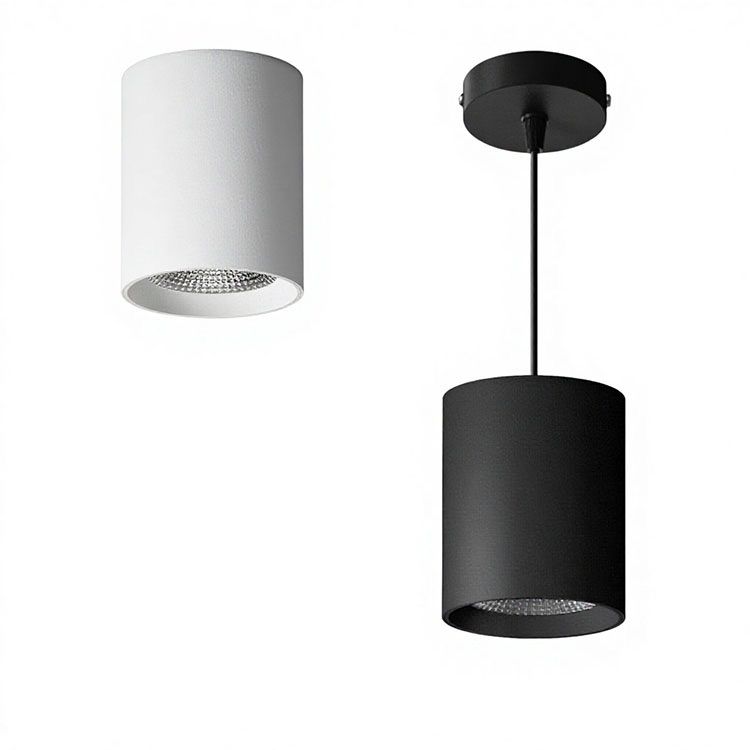
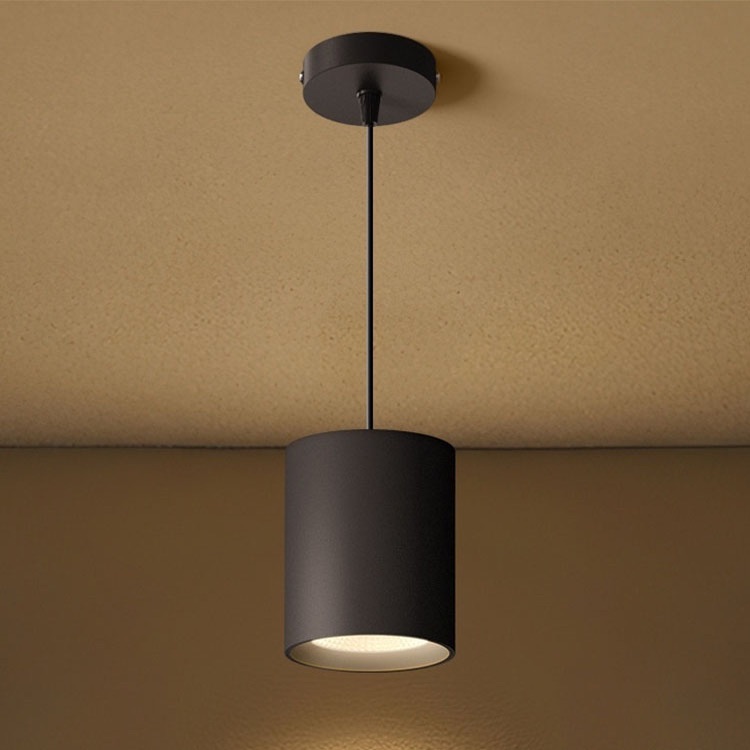
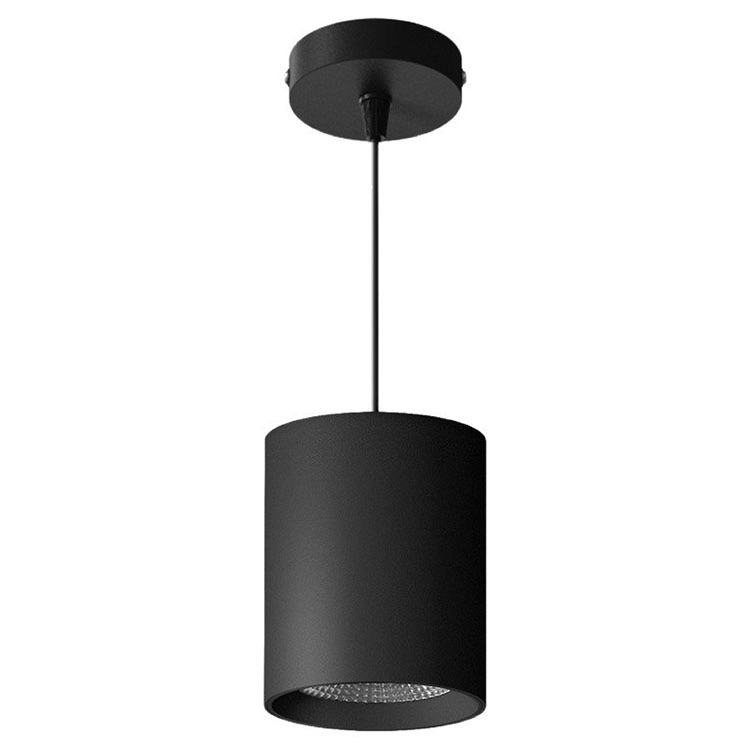
For commercial projects, I would start with purpose-built 商業防眩LEDダウンライト when the space needs clean ceiling lines, controlled brightness, and repeated visual comfort. ChineseLEDLight’s own product page calls out anti-glare optics, recessed aperture design, stable color performance, CCT/CRI options, dimming compatibility, and project drawing support — exactly the boring details that stop lighting rollouts from becoming complaint machines.
And yes, I said boring. Boring wins.
Where Anti-Glare LED Downlights Actually Belong
Anti-glare downlights are not for every ceiling. They belong where the user’s eye, screen, merchandise, or reflective surface is exposed to direct ceiling brightness.
That sounds simple. It is not.
A glossy reception desk, polished tile, glass partition, black monitor, acrylic retail display, stainless café counter, or white clinic floor can turn a normal downlight into a miniature interrogation lamp. In those spaces, the best anti-glare downlights are usually deep-recessed, baffled, lensed, or fitted with a dark reflector that cuts high-angle brightness before it reaches the eye.
Here is where I would use them first.
1. Offices With Screens, Desks, and Long-Hour Work
Low glare downlights for offices make sense in meeting rooms, executive offices, reception desks, corridors beside open-plan work zones, and smaller focus rooms where ceiling cleanliness matters.
But I would be careful in large open-plan offices. Hard opinion: rows of small downlights over desks are often lazy design. They create scallops, shadows, and monitor glare unless the layout is carefully calculated.
OSHA’s workstation guidance is blunt about glare: shielded lighting, diffusers, louvers, and avoiding intense uneven light in the field of vision help reduce eye strain and fatigue. That is not marketing language; that is workplace risk language from OSHA’s computer workstation environment guidance.
For office areas, I want anti-glare LED downlights where people look horizontally for long periods. Think:
Office Area
Use Anti-Glare Downlights?
Why
Meeting rooms
Yes
Reduces screen reflection and face-level harshness
Reception desks
Yes
Controls glare on glossy counters and guest sightlines
Corridors near workstations
Yes
Keeps circulation bright without punching into screens
Open-plan desk grids
Use carefully
Linear low-glare fixtures may perform better
Breakout lounges
Yes
Warmer CCT and dimming improve comfort
Server rooms
Usually no
Uniform industrial/task lighting matters more
For larger office corridors and modular ceilings, I would also look at commercial LED recessed ceiling grid linear lights because a linear optical chamber can give better uniformity than scattered pinpoints. Downlights are not always the hero. Sometimes they are the accent layer pretending to be the whole system.
Retail Stores: Where Bad Downlights Kill Product Value
Retail is ruthless.
A $90 shirt can look like a $19 clearance item under the wrong downlight. A jewelry case can look dead. A cosmetics wall can distort skin tones. A grocery aisle can make fresh food look tired before noon.
The trap is simple: retailers ask for brightness, but what they need is contrast control.
Recessed LED lighting for retail spaces works best in circulation aisles, fitting-room corridors, checkout areas, boutique display zones, and premium feature ceilings where you want the fixture to disappear. For merchandise walls, I usually prefer track or adjustable accent lighting, because fixed downlights often miss the vertical plane where the product actually lives.
That is why ChineseLEDLight’s モダンな商業施設向けの調節可能なLEDトラックライト are a useful internal match here. Track heads with glare-controlled optics make more sense for retail shelves, galleries, showrooms, and feature walls where aiming changes over time.
Downlights for calm. Track lights for drama.
A real-world data point backs up the business case for smarter lighting, not merely more lighting. Reuters reported that Keppel Bay Tower’s retrofit in Singapore used a smart lighting system with occupancy and daylight sensing, cutting lighting bills by 70%, while the broader renovation reduced energy use by 30% and cost US$2.6 million. That is the kind of number facility owners actually understand, and it came from Reuters’ 2024 report on Keppel Bay Tower.
Retail owners should hear the message clearly: lighting design is not decoration. It is margin protection.
Hotels, Clinics, Schools, and Corridors: The Spaces Nobody Respects Until Guests Complain
Corridors are where cheap downlights go to hide.
And then guests complain.
Hotel corridors, clinic waiting areas, school hallways, lift lobbies, and apartment common areas all share a problem: people move through them at eye level under repeated ceiling fixtures. If the downlights are shallow, overpowered, or poorly spaced, the result is a dotted glare tunnel.
For hospitality, I like anti-glare LED downlights in:
Commercial Space
Best Placement
Suggested Lighting Logic
Hotel corridors
Along circulation paths, away from direct eye axis
Deep cutoff, warm 2700K–3000K, dimming at night
Clinic waiting areas
Seating zones and reception
Low glare, CRI 80–90+, soft contrast
School corridors
Transition and locker zones
Durable optics, balanced uniformity
Elevator lobbies
Perimeter and wayfinding points
Controlled brightness, clean ceiling pattern
Restaurant aisles
Between tables, not directly over faces
Narrower beams, dimming, glare shields
Boutique cafés
Counter and queue areas
Warm CCT, controlled sparkle, high CRI
The U.S. Department of Energy’s 2024 school lighting guidance says LED upgrades from fluorescent systems can reduce lighting energy consumption by 20% to 60%, but it also warns that glare, flicker, and other visual discomfort can lead to headaches and eye strain. That document is aimed at schools, but the lesson carries straight into clinics, offices, and hospitality corridors. Read the DOE’s Lighting Specification Guidance for Schools and you will see the pattern: energy savings without visual quality is only half a job.
For renovation ceilings where recessed installation is not possible, I would consider surface-mounted all-aluminum anti-glare linear ceiling lights. Surface-mounted fixtures are not automatically inferior. In older buildings with shallow plenums, asbestos concerns, or service restrictions, they may be the safer choice.
The Data Nobody Mentions in the Sales Pitch
Here is the market reality.
The U.S. Department of Energy reported in May 2024 that LED installed units represented roughly 48% of the installed base in residential and commercial sectors in 2020. The same DOE report said commercial buildings had 1.6 billion lighting installations and accounted for about 69% of the 244 TWh of U.S. building lighting electricity use in 2020. That is not a niche category; that is a massive operating-cost lever. See the DOE’s Lighting Market Characterization report summary.
But here is the uncomfortable part: LED adoption does not equal good lighting.
A bad LED fixture is still bad. It just wastes less electricity while annoying more people.
For federal procurement, the DOE’s FEMP guidance gives commercial and industrial LED luminaire efficiency requirements such as 140 lm/W for commercial 2 ft. x 4 ft. troffers, and it notes that LED luminaires are compatible with occupancy sensors, task tuning, and dimming. It also estimates lifetime savings of $135 to $161 per lamp for efficient commercial 2 ft. x 4 ft. LED luminaires compared with less efficient models. That guidance is in the DOE’s commercial and industrial LED luminaire purchasing page.
The lesson for commercial LED downlights is direct: do not buy on watts. Buy on photometrics, cutoff, beam angle, driver quality, lumen maintenance, dimming behavior, CCT binning, CRI, warranty, and installation geometry.
Yes, that is a lot.
But what is cheaper: checking the IES file now, or replacing 300 fixtures after tenants start complaining?
My Field Rule: Use Downlights for Control, Not Coverage
I use a simple rule when reviewing LED downlights for commercial spaces: if the downlight is doing everything, the design is probably weak.
Commercial recessed downlights should usually be one layer in the system. They can provide ambient pools, transition lighting, visual rhythm, and task support, but they should not be forced to solve every surface, every aisle, every desk, every display, and every wall.
Here is my practical selection grid.
Requirement
What I Ask For
なぜ重要なのか
グレアコントロール
Deep reflector, baffle, lens, honeycomb, UGR-style data where available
Reduces harsh high-angle brightness
ビーム角
24°, 36°, 60°, or custom optics
Controls spacing, shadows, and wall spill
CCT
2700K, 3000K, 3500K, 4000K
Matches hospitality, office, retail, or clinic mood
CRI
CRI 80+ minimum, CRI 90+ for retail/color work
Protects skin tones, food, merchandise, art
調光
0–10V, DALI, TRIAC, or project-specific driver
Prevents overlighting during low-traffic periods
フォトメトリクス
IES/LDTファイル
Lets designers calculate real spacing and lux
バッチ制御
CCT/CRI binning, SDCM target
Prevents one ceiling from showing three “white” colors
Housing
Aluminum heat sink, serviceable driver access
Extends life and reduces maintenance pain
ChineseLEDLight’s homepage positions the company around IES/LDT photometrics, cut sheets, submittals, BIM/Revit support on request, stable CCT/CRI bins, optics control, and OEM/private-label support. For a professional buyer, that matters more than glossy product photos. Their 商業用LED照明メーカーページ is worth linking from this topic because it supports the procurement side behind the fixture choice.
Where Not to Use Anti-Glare Downlights
Do not use anti-glare LED downlights everywhere just because the phrase sounds premium.
I would avoid them as the main lighting system in high-bay warehouses, industrial production floors, large supermarkets, parking garages, and large classrooms unless the photometric plan proves they can deliver uniformity without excessive fixture count. In those spaces, linear ambient fixtures, high bays, troffers, wall washers, or track systems may do the job better.
Also, do not bury a low-output decorative downlight in a black ceiling and expect it to light a retail aisle. That is not design. That is wishful thinking with a purchase order.
For hotel lobbies and reception areas where ambience and smart scenes matter, smart anti-glare LED downlights can be useful, especially when dimming scenes, warmer tones, and cleaner ceiling lines are part of the concept. But if the space needs flexible aiming, use track. If it needs uniform work-plane coverage, consider linear. If it needs quiet, face-friendly pools of light, downlights earn their place.
よくあるご質問
What are anti-glare LED downlights?
Anti-glare LED downlights are recessed or ceiling-mounted luminaires designed to reduce direct visual harshness by using deep-set light sources, reflectors, baffles, lenses, louvers, or controlled beam angles that limit high-angle brightness reaching the eye.
In plain English, they make the ceiling less painful to look at. They are especially useful in offices, hotels, corridors, clinics, restaurants, and retail stores where people sit, walk, read, shop, or work under the same fixtures for long periods.
Where to use anti-glare LED downlights in commercial spaces?
Use anti-glare LED downlights in commercial spaces where people experience direct ceiling brightness, screen reflection, glossy surface glare, or long visual exposure, including offices, meeting rooms, hotel corridors, clinic waiting areas, retail aisles, reception desks, restaurants, and elevator lobbies.
I would not start with warehouses or large open offices unless the lighting layout proves the downlights can deliver enough uniformity. The best use is controlled comfort, not brute-force brightness.
Are commercial LED downlights good for offices?
Commercial LED downlights are good for offices when they are low-glare, properly spaced, dimmable, and supported by photometric data, but they can cause eye strain if shallow housings, harsh beam angles, or poor fixture placement create reflections on monitors and desks.
For offices, I prefer anti-glare optics, CRI 80+, 3500K–4000K CCT, dimming control, and UGR-style glare review where possible. In open-plan desk zones, linear low-glare fixtures may outperform small downlights.
What is the best color temperature for commercial recessed downlights?
The best color temperature for commercial recessed downlights depends on the space: 2700K–3000K suits hotels and restaurants, 3000K–3500K works for boutiques and lounges, while 3500K–4000K is common for offices, clinics, schools, and task-heavy commercial interiors.
Do not mix CCT randomly across one ceiling. Batch drift is real. Ask for CCT binning and SDCM control if the project has repeated SKUs across multiple rooms or stores.
Are anti-glare downlights better than track lights for retail?
Anti-glare downlights are better for calm ambient lighting in retail aisles, checkout areas, fitting-room corridors, and premium ceilings, while track lights are usually better for adjustable product highlighting, feature walls, seasonal displays, galleries, and showrooms.
Retail lighting should guide the eye. Downlights create rhythm and comfort; track lights create focus and contrast. The better design often uses both.
次のステップ
Do not ask a supplier for “bright commercial LED downlights.” Ask for the IES file, beam angle, cutoff design, CCT, CRI, dimming driver, UGR-style data if available, housing depth, trim finish, warranty, and batch consistency plan.
Then match the fixture to the space: offices need low glare and screen comfort, retail needs vertical product value, hotels need warmth and calm, clinics need clean visual clarity, and corridors need guidance without glare tunnels.
If you are sourcing for a project, start with a fixture family that supports documentation, repeatable production, and optics control — then request a quote, sample, or photometric package before committing to a full rollout.