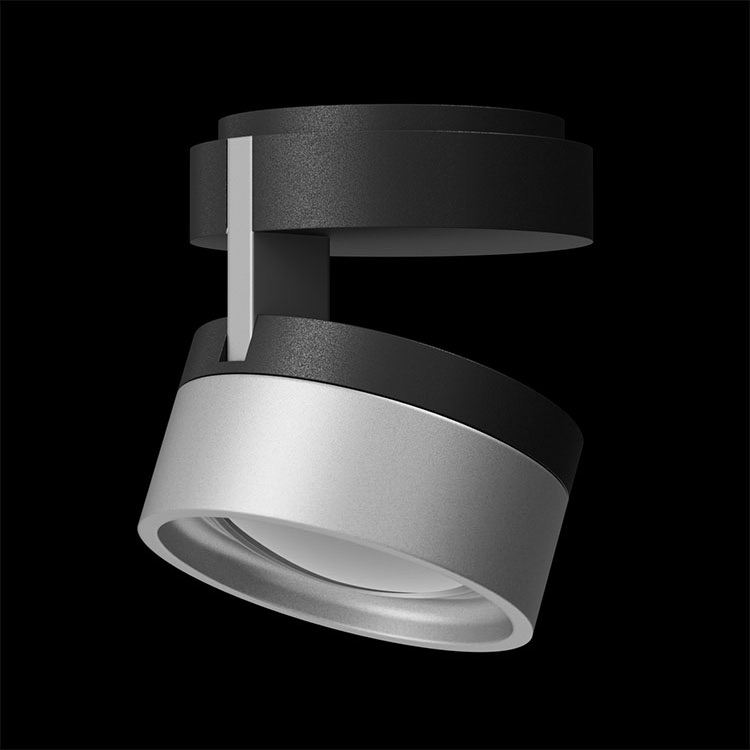
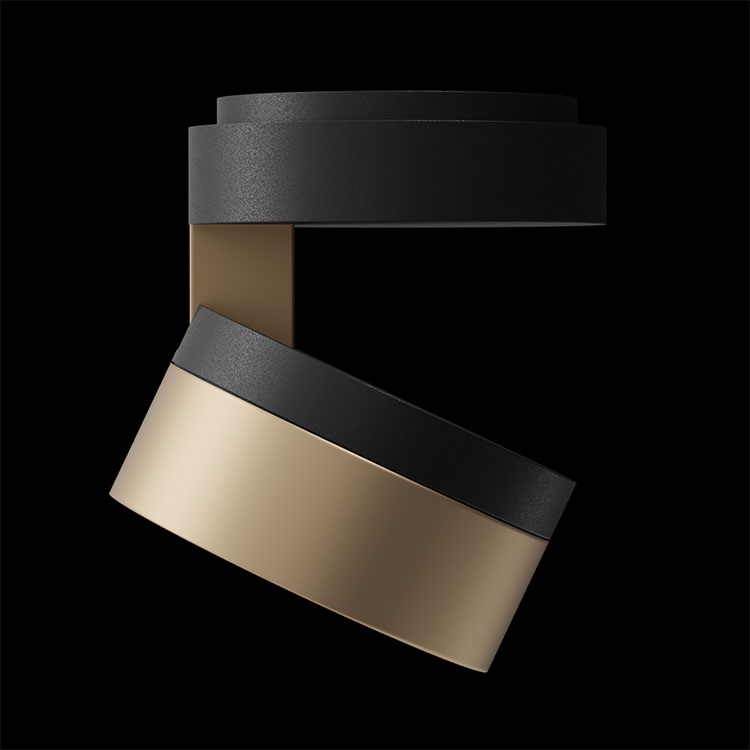
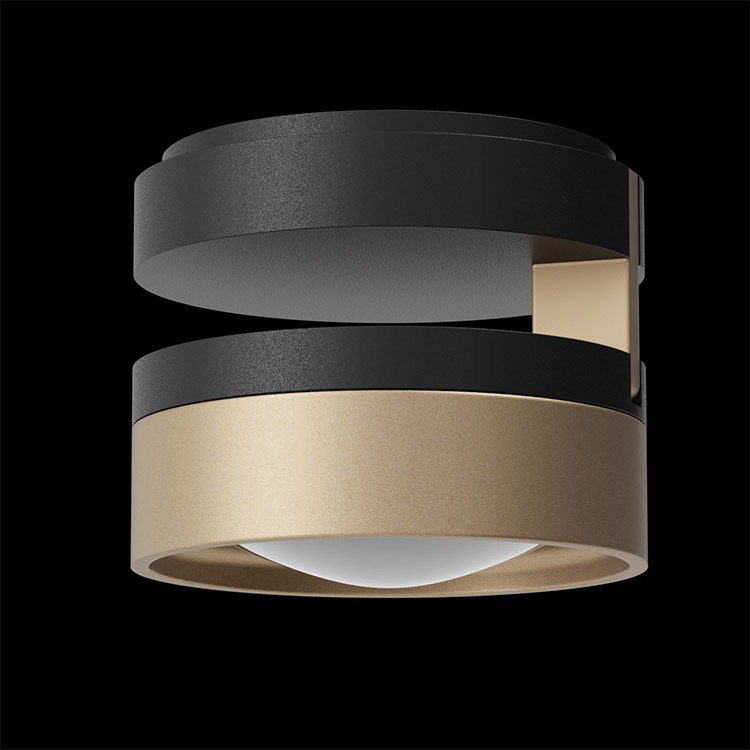
When to Use Adjustable LED Downlights in Commercial Projects
Adjustable LED Downlights are not “premium by default.” They are useful when beam direction matters: retail displays, hotel lobbies, galleries, reception walls, and retrofit ceilings where the ideal aiming point is unknown until site conditions appear.
The uncomfortable truth about adjustable LED downlights
Most projects overuse them.
I’ve walked ceiling grids where every recessed fixture had an adjustable head, yet 80% of those heads were pointed straight down, doing the exact job a cheaper fixed downlight could have done with less trim shadow, less mechanical complexity, and fewer aiming errors after installation.
Why pay for movement you will never use?
Adjustable LED Downlights earn their place when the light has to aim at something specific: a feature wall, a product shelf, a reception desk, artwork, a corridor turn, a hotel room reading zone, or a retail display that changes every season. They do not earn their place just because the word “adjustable” sounds more professional.
Here is the hard industry truth: many commercial lighting projects fail not because the LED chip is bad, but because the beam is pointed at the wrong surface. The fixture is fine. The layout is lazy.
And that is where adjustable recessed lighting becomes useful.
According to the U.S. Energy Information Administration, lighting accounted for about 17% of electricity consumption in U.S. commercial buildings in 2018, equal to 208 billion kWh. ENERGY STAR reports the same 17% commercial-building electricity share for lighting, which tells us something obvious but often ignored: ceiling fixtures are not decorative leftovers; they are operating-cost machines.
When adjustable recessed lighting actually beats fixed downlights
Use Adjustable LED Downlights when the target plane is uncertain, vertical, angled, or likely to change.
That sounds simple.
But in practice, specifiers get trapped by ceiling drawings. A reflected ceiling plan looks clean at 1:100 scale, then the site gives you sprinkler heads, HVAC diffusers, uneven joists, signage, soffits, display shelving, and one angry tenant who wants the counter moved 600 mm to the left. What then?
That is when a gimbal LED downlight saves the job.
A fixed LED recessed downlight is a flood tool. It throws light downward, usually with a symmetrical beam. An adjustable downlight is a correction tool. It lets the installer shift the beam after the ceiling is already cut.
I like them in these situations:
Commercial project condition
Use adjustable LED downlights?
Better beam logic
What I would check before approval
Retail feature walls
Yes
15°–36° tilt, 24° or 36° beam
CRI 90+, R9 value, glare control, aiming lock
Hotel corridors
Sometimes
Narrow beam for artwork, fixed for general floor light
UGR target, cut-off angle, trim depth
Office open areas
Usually no
Fixed downlights or linear fixtures
Uniformity, glare, desk reflections
Museum or gallery displays
Yes
Narrow beam, high CRI, low spill
3000K/3500K, SDCM ≤3, UV/IR behavior
Restaurants and bars
Yes
Layered pools of light
Dimming curve, warm CCT, beam overlap
Clinics and waiting areas
Rarely
Fixed anti-glare downlights
Visual comfort, maintenance access
Retrofit ceilings
Often yes
Adjustable beam compensates for imperfect cutouts
Cutout size, ceiling depth, driver access
Shopping mall common areas
Mixed
Track lights or adjustable downlights near displays
Re-aiming frequency, maintenance method
For general ambient ceilings, I would rather use 商業防眩LEDダウンライト with a stable recessed aperture and optical cut-off. For changing merchandise zones, I would move toward adjustable LED track lights for modern track lighting fixtures because track heads are easier to re-aim, replace, and reconfigure after the tenant changes the store layout.
That is not a soft recommendation. It is a cost-control position.
The real reason commercial LED downlights fail: glare, not wattage
Glare kills projects.
A 12W adjustable LED downlight can feel worse than a 20W fixture if the diode is exposed, the lens sits too shallow, or the beam is aimed into the normal viewing angle of seated occupants. In hotels, restaurants, retail fitting rooms, and reception spaces, glare complaints arrive faster than energy bills.
The U.S. General Services Administration stated in 2024 that lighting can consume 10% to 25% of a building’s electricity, LED conversion typically saves 50% over fluorescent baselines, and controls can save an additional 80% of lighting energy. That does not mean every LED fixture is good. It means the financial case is strong enough that bad design now hides behind “energy efficiency” language.
And I dislike that.
A project-grade adjustable recessed lighting spec should mention more than wattage. I want to see:
ビーム角: 15°, 24°, 36°, or 60°, not vague “spot/flood”
Tilt and rotation: for example, 30° tilt and 355° rotation
Cut-off angle: deep source position for lower glare
CRI: 80 minimum for back-of-house, 90+ for retail, hospitality, galleries
CCTだ: 2700K, 3000K, 3500K, 4000K depending on use
Color consistency: SDCM ≤3 for visible ceiling groups
Dimming: 0–10V, DALI, TRIAC, Casambi, Zigbee, or project-specific protocol
Lifetime data: L70, preferably with thermal design details
Housing material: die-cast aluminum or extruded aluminum, not mystery metal
Driver access: serviceable without destroying the ceiling
If the supplier cannot answer those, the low price is a warning label.
For projects needing controlled visual comfort, smart anti-glare LED downlights can make sense where scenes, dimming, and softer viewing angles matter. For offices and corridors where a straight ceiling rhythm matters more than beam aiming, 現代的な商業LEDは天井の格子線形ライトを引込めた may be cleaner than forcing dozens of small adjustable points into a ceiling that wants linear order.
Where adjustable LED downlights make the most money back
Adjustability pays back when it prevents rework.
Not theoretically. On site.
A restaurant owner changes table spacing after furniture delivery. A boutique moves mannequins after visual merchandising review. A hotel lobby installs artwork late. A showroom swaps display heights. A fixed downlight layout punishes every one of those changes.
Adjustable LED Downlights reduce that punishment.
について DOE SSL Forecast Report estimates that by 2035, LED lamps and luminaires will represent 84% of all lighting installations, while LED lighting already enabled 1.1 quads of energy savings in 2017, equal to $12 billion in U.S. consumer savings. That is the macro story. The micro story is uglier: a contractor with a hole saw, a finished gypsum ceiling, and a designer asking why the wall looks dead.
Use adjustable LED recessed downlights in:
Retail stores and boutiques
Retail lighting is not just illumination. It is persuasion.
A 3000K beam with CRI 90 can warm leather goods and cosmetics. A 4000K beam can sharpen electronics, eyewear, and sports products. A narrow 24° beam can lift a premium display; a 60° beam can flatten it into visual oatmeal.
For high-value retail, I usually prefer adjustable heads near feature walls and fixed downlights in circulation paths. If the store changes displays every quarter, consider adjustable color temperature LED grid spotlights where CCT flexibility supports seasonal merchandising.
Hotels, restaurants, and bars
Hospitality lighting should hide the source and reveal the surface.
That sounds poetic, but it is practical. Guests do not compliment a visible LED chip blasting into their eyes at 9 p.m. They compliment the table, the texture, the wall, the mood. Adjustable LED Downlights work above reception counters, artwork, lounge seating, buffet counters, and textured walls.
But use fewer than the salesperson wants to sell you.
Galleries, museums, and showrooms
Gimbal LED downlights belong here because objects move, exhibits change, and vertical illumination matters. Beam control is not optional. Use high CRI, stable CCT, and careful aiming. For sensitive materials, confirm spectral data and heat behavior; LEDs contain little infrared compared with legacy sources, but poor fixture design can still create local heat problems.
Retrofit commercial ceilings
This is where adjustable recessed lighting becomes a practical insurance policy.
Existing ceilings rarely match the drawing. Joists appear. Ducts block ideal positions. Old cutouts are not centered. Adjustable LED Downlights let you keep the ceiling opening and still push the beam toward the target. That can save labor, patching, repainting, and arguments.
Where I would not use adjustable LED downlights
Here is my unpopular opinion: if the room needs uniform light, adjustable downlights are often the wrong tool.
Use fixed LED recessed downlights, linear lights, panels, or indirect systems when the goal is calm, even ambient illumination. In offices, classrooms, clinics, supermarkets, and back-of-house corridors, adjustability often adds cost without adding value.
について International Energy Agency notes that around 90 countries now use minimum energy performance standards, covering almost 80% of global lighting energy consumption and over 90% in Europe, the United States, and China. Compliance pressure is real. But efficiency rules do not solve bad beam placement.
Do not use adjustable LED downlights just because:
The ceiling looks more “premium” with deep trims
The client asked for flexibility but has no changing displays
The supplier has excess stock
The lighting schedule copied a retail spec into an office job
The designer wants drama in a room that needs visual comfort
This happens constantly.
And yes, I have seen “luxury” office projects where adjustable spot downlights created bright cones on desks, reflected off laptop screens, and made the space worse than a basic low-glare linear system.
A specifier’s checklist for choosing the best LED downlights for commercial projects
The best LED downlights for commercial projects are not the brightest ones. They are the ones that match the task, ceiling condition, operating hours, maintenance plan, and visual comfort target.
For serious projects, I would ask these questions before approving Adjustable LED Downlights:
Spec question
Weak answer
Professional answer
What is the target surface?
“General lighting”
“Feature wall at 2.4 m height”
What beam angle is needed?
“Standard beam”
“24° for accent, 36° for mixed display”
How much aiming range?
“Adjustable”
“30° tilt, 355° rotation, lockable head”
What glare control?
“Anti-glare”
“Deep recessed source, black baffle, tested cut-off”
What color quality?
“Warm white”
“3000K, CRI 90, SDCM ≤3”
What control system?
“Dimmable”
“0–10V / DALI / phase dimming matched to driver”
How is it serviced?
“Long life”
“Front-access module and replaceable driver”
What data is available?
“CE/RoHS”
“IES file, LM-79 report, thermal data, datasheet”
The U.S. Department of Energy’s FEMP guidance for commercial and industrial LED luminaires lists minimum efficacy requirements such as 140 lm/W for commercial 2 ft. x 4 ft. troffers and shows that efficient models can produce meaningful lifetime savings versus less efficient products. Downlights are a different fixture class, but the procurement lesson carries over: do not buy commercial lighting without performance data.
One more thing.
Ask for IES files.
If the answer is “we can send pictures,” walk away. Pictures sell fixtures. Photometric files protect projects.
The controls issue nobody wants to price correctly
Controls are not garnish.
The DOE-backed Integrated Lighting Campaign reported a Tinker Air Force Base case study where replacing existing lighting with LED fixtures saved more than 60% energy compared with the old technology, while lighting controls saved another 8% to 23% compared with the LED baseline. That is the kind of number facility managers remember.
But controls can also ruin a project when specified lazily.
I’ve seen beautiful adjustable LED downlights flicker on cheap dimmers, buzz on incompatible drivers, and jump from 20% to 0% instead of fading smoothly. In restaurants and hotels, that is not a technical defect to the customer. It is a mood killer.
Match the dimming protocol early:
TRIAC / phase dimming: smaller hospitality and residential-style projects
0–10V: common commercial dimming, but wiring coordination matters
DALI: better addressability for larger projects
DMX: theatrical, façade, entertainment, color-control use
Casambi / Bluetooth mesh: flexible retrofit scenes
Zigbee / Tuya-style smart control: useful where app-based control is requested
For adjustable LED downlights in commercial projects, the driver is not a side part. It is half the product.
よくあるご質問
What are Adjustable LED Downlights?
Adjustable LED downlights are recessed luminaires with a tilting or rotating optical module that lets installers aim the beam after installation toward walls, displays, artwork, counters, or task zones instead of sending all light straight downward like a fixed recessed downlight. They are useful when the target surface is not directly below the ceiling opening.
In commercial projects, they are most valuable where beam direction affects revenue, comfort, or presentation. Retail, hospitality, galleries, showrooms, and retrofit ceilings are the strongest use cases.
When should I use adjustable LED downlights in commercial projects?
Use adjustable LED downlights when a commercial space needs controlled accent lighting, flexible beam direction, or post-installation aiming for vertical surfaces, retail displays, hotel features, artwork, reception counters, or retrofit ceilings where fixed downlights cannot reliably hit the intended target. They are less suitable for simple uniform ambient lighting.
The simplest test is this: if the object might move, or the ceiling hole cannot be perfectly placed, adjustability has value. If the job is just general floor illumination, fixed commercial LED downlights are usually cleaner and cheaper.
Are gimbal LED downlights better than fixed LED recessed downlights?
Gimbal LED downlights are better than fixed LED recessed downlights only when directional aiming is needed, because their tilting mechanism allows the beam to hit walls, displays, art, or angled task areas that a fixed downlight would miss. For uniform ambient lighting, fixed downlights often provide better simplicity, lower cost, and fewer aiming problems.
The word “better” depends on the target. A gimbal downlight is a precision tool. A fixed downlight is a general lighting tool. Mixing both is often the smartest commercial lighting strategy.
How do I choose adjustable LED downlights for commercial lighting projects?
Choose adjustable LED downlights by matching beam angle, tilt range, glare control, CRI, CCT, dimming protocol, driver access, ceiling depth, and photometric data to the actual commercial task rather than selecting by wattage or trim appearance alone. A strong specification should include IES files, thermal design details, and color consistency data.
For retail, I would start with CRI 90, 3000K or 3500K, 24° to 36° beams, and deep anti-glare optics. For hospitality, I would focus harder on dimming smoothness and source concealment.
What is the biggest mistake when specifying commercial LED downlights?
The biggest mistake is treating commercial LED downlights as interchangeable ceiling dots instead of optical tools with different beam angles, glare behavior, color quality, dimming performance, and maintenance requirements. This leads to overlit floors, dark walls, eye-level glare, poor merchandise rendering, and expensive post-installation corrections.
I would rather see fewer fixtures with better optics than a ceiling packed with cheap adjustable heads. More light is not always better light. Sometimes it is just more evidence that nobody aimed the room.
Final Thoughts: Specify the beam, not just the fixture
Adjustable LED Downlights are worth using when beam direction has commercial value.
Use them for accenting, correcting, highlighting, and adapting. Do not use them as a lazy premium upgrade for every ceiling hole. In professional commercial lighting projects, the question is not “fixed or adjustable?” The better question is: “What surface are we trying to make visible, valuable, or comfortable?”
If you are planning a retail, hospitality, office, showroom, or retrofit lighting project, start with the target surfaces, then request the datasheet, IES file, beam options, dimming compatibility, and shop drawing support before approving the fixture schedule. For project support, compare your ceiling plan against suitable 商業用LEDダウンライト, adjustable track options, and recessed linear systems before the holes are cut.