How Narrow Beam LED Downlights Improve Accent Lighting
Narrow beam LED downlights do not just make objects brighter. They decide what the eye notices first, what disappears into shadow, and whether a room feels intentional or cheap.
Most bad accent lighting is not too dim. It is too lazy.
I have seen project teams spend serious money on marble, timber veneer, brushed metal trims, custom shelving, and then ruin the entire scene with a wide-beam fixture that throws light everywhere like a nervous intern holding a flashlight. Why does this still happen?
Because many buyers treat LEDダウンライト as commodity ceiling hardware instead of optical tools.
A narrow beam downlight is different. It does not try to brighten the whole room. It picks a target, cuts the noise around it, and creates visual hierarchy. That is the whole trick. Not magic. Physics.
について U.S. Department of Energy’s LED Lighting guidance makes a point many spec sheets hide in plain sight: LEDs emit light directionally, which reduces the need for reflectors and diffusers that trap light. That matters for recessed LED spotlights because directional output is exactly what makes a tight beam useful for artwork, merchandise, hotel niches, jewelry counters, and feature walls.
But here is the hard truth: a narrow beam LED downlight can make a space look expensive, or it can make it look theatrical in the worst way. The difference is not the wattage. It is the beam angle, cut-off, aiming, contrast ratio, color quality, and whether anyone bothered to test the actual object under the actual ceiling height.
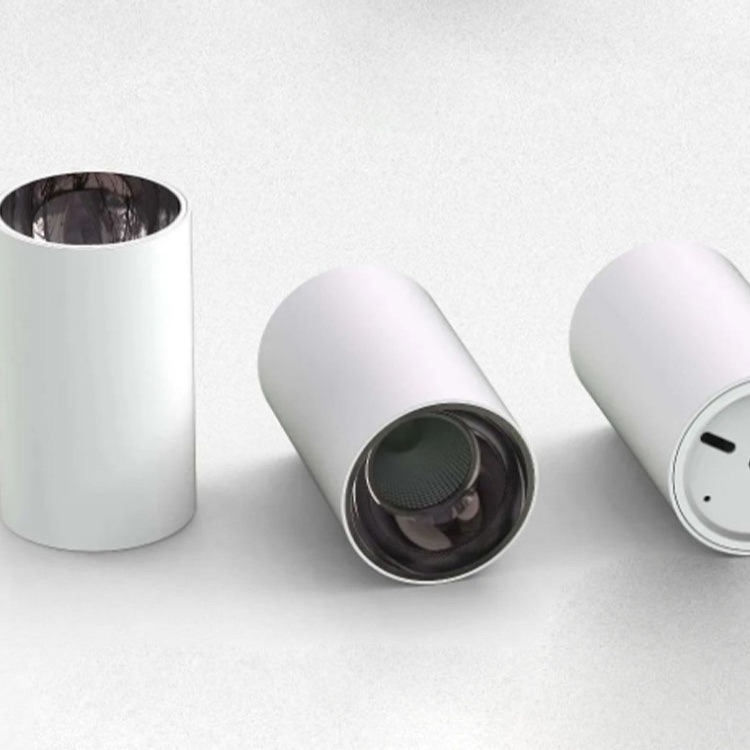
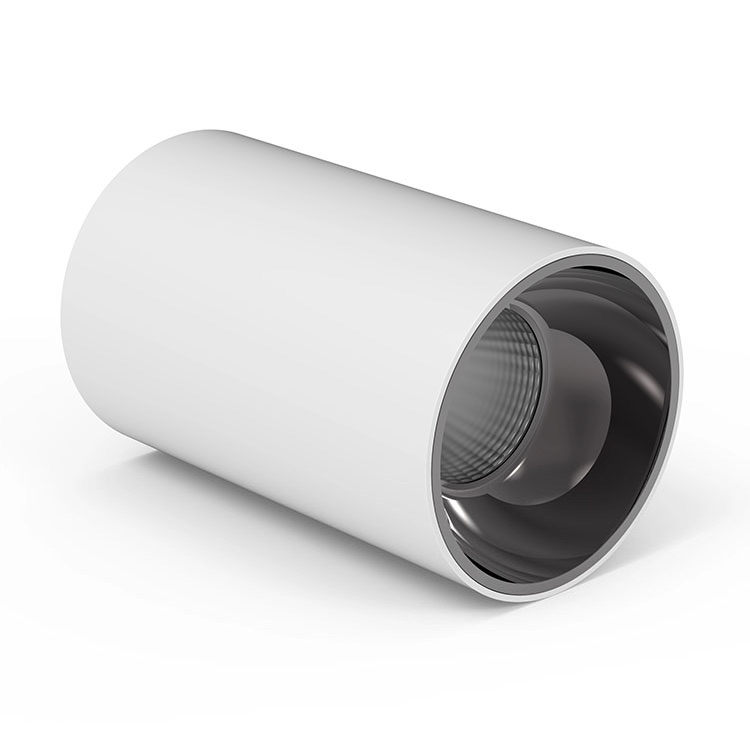
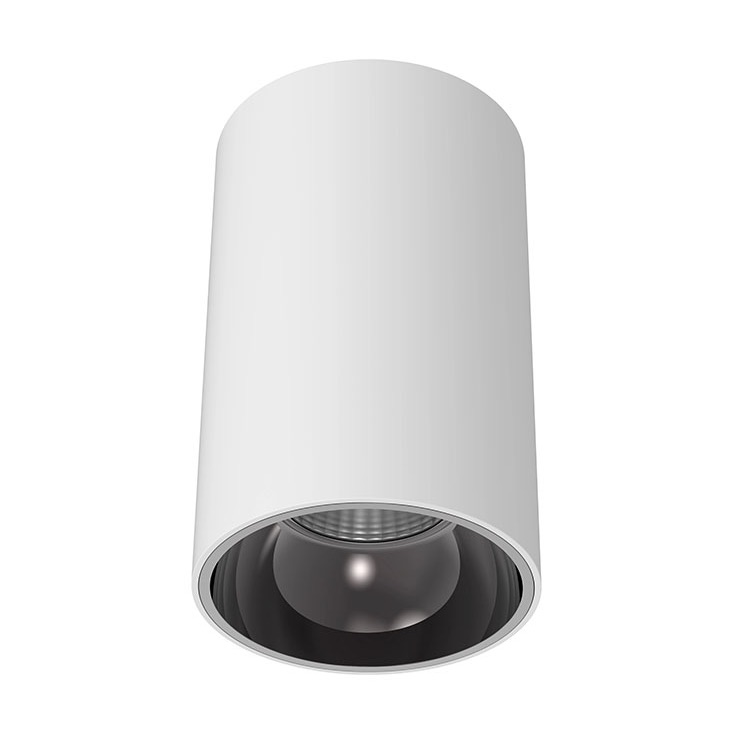
For project-grade applications, I would anchor the specification around a purpose-built fixture such as this narrow beam angle embedded LED downlight rather than forcing a general downlight to behave like a spotlight. General fixtures are fine for circulation. They are not born to do surgery.
Beam Angle Is the Real Product, Not the Housing
A beam angle is the spread of usable light from the fixture, usually measured in degrees from the center of the beam to the point where intensity drops to 50% of peak candela. In plain English: it tells you whether the light lands like a spear, a cone, or a soft blanket.
Small beam. Big consequence.
When a 15° or 24° narrow beam LED downlight hits a sculpture, a bottle display, or a reception desk logo, it creates a high-intensity focal point while leaving surrounding surfaces quieter; that contrast is what makes the viewer’s eye stop, and in commercial lighting, stopping the eye is often the entire economic purpose of the fixture.
Would you use a floodlight to sell diamonds?
The Lighting Design Lab’s guidance on accent lighting and contrast ratios is blunt enough to be useful: 5:1 creates a distinct focal area, 10:1 is the minimum for a strong focal accent, and 15:1 feels dramatic. Those numbers are not decorative theory. They are field reality.
Here is how I would read beam angle choices when specifying narrow beam LED downlights:
Beam Angle
Common Use
Visual Result
Risk If Misused
10°–15°
Jewelry, museum vitrines, small sculptures, tall ceilings
Retail feature walls, artwork, hotel reception accents
Focused but more forgiving
Still needs careful spacing and aiming
30°–36°
Shelving, corridors with focal points, restaurant walls
Balanced accent with softer edges
Can lose contrast if ambient light is high
40°+
General highlighting, lower ceilings, wide displays
Broad illumination
Often too flat for true accent lighting
If the designer needs crisp display focus, the high-power LED mini spotlight narrow beam spotlight is a better conceptual cousin than a comfort-first office downlight. It is built around controlled emphasis, not polite background brightness.
Why Narrow Beam LED Downlights Make Materials Look More Expensive
Accent lighting is not about “more light.” It is about controlled difference.
Stone needs grazing or focused highlight to reveal texture. Brushed metal needs angle discipline or it turns into glare. Retail packaging needs vertical brightness, not just ceiling lux. Art needs color rendering that does not murder reds, woods, skin tones, or deep blues.
And yes, I said murder. Bad CRI does that.
A narrow beam downlight improves accent lighting in five practical ways:
It Increases Contrast Without Raising the Whole Room
If ambient lighting is already high, the accent has to fight harder. That usually means more candela on the target, not more lumens dumped into the room.
This is where narrow beam LED downlights beat broad downlights. A 10W narrow optic can sometimes create more perceived impact than a 20W wide-beam fixture because the light is concentrated where the viewer is supposed to look.
The DOE estimates that there are more than 600 million recessed downlights installed in U.S. homes and businesses, which tells us something important: the form factor is everywhere, but the optical quality varies wildly. A recessed hole in the ceiling is not a lighting strategy.
It Reduces Spill Light
Spill is the enemy of mood.
When light leaks onto adjacent walls, ceiling planes, floors, and people’s faces at the wrong angle, the scene loses hierarchy. Restaurants become cafeterias. Galleries become warehouses. Retail stores become storage rooms with price tags.
For low-glare commercial work, I would look first at the broader LED downlights category and then narrow the selection by beam angle, trim depth, reflector finish, CCT, CRI, dimming protocol, and IES file availability.
It Helps Control Glare
The ugliest lighting mistake is visible brightness from the fixture itself.
Nobody wants to look up and see a ceiling full of tiny white knives. Deep recessed optics, black reflectors, honeycomb accessories, and proper cut-off angles matter. A narrow beam with poor glare control is not premium. It is punishment.
For office, hotel, and retail projects that need adjustability, 正方形はオフィスのための調節可能な downlights を引込めた can make more sense than fixed optics, especially when the ceiling grid and furniture plan are still moving during late-stage coordination.
It Makes Scenes Easier to Dim
Dimming is not decoration. It is risk management.
The U.S. General Services Administration reported in 2024 that lighting can consume 10% to 25% of a building’s electricity, LED conversions typically save 50% over fluorescent baselines, and controls can save additional lighting energy in the right conditions, according to its energy-efficient lighting guidance for federal buildings.
That does not mean every narrow beam downlight should be sold as an energy story. In accent lighting, the stronger argument is operational control: lunch scene, evening scene, cleaning scene, display-change scene, event scene. One fixture. Several moods.
It Protects the Design Intent
This is where manufacturers either earn trust or expose themselves.
A serious spec should include beam angle, lumen output, center beam candlepower, CCT, CRI, SDCM, UGR or glare notes where relevant, driver type, dimming compatibility, thermal design, warranty terms, and photometric files. If a supplier cannot provide IES/LDT data, I get suspicious fast.
について OEM/ODM LED照明サービス page is relevant here because beam control is often not a catalog-only decision. Retail chains, hotels, galleries, and showrooms may need custom trims, reflector finishes, driver locations, CCT bins, packaging, or private-label documentation for repeat rollout work.
The Market Is Tougher Than the Brochures Admit
Here is my unpopular opinion: the LED lighting market is not short of products. It is short of honest optics.
The DOE’s 2020 solid-state lighting forecast projected that LED lighting could reach 569 TWh in annual U.S. energy savings by 2035, with LED lamps and luminaires expected to make up 84% of lighting installations, according to its Solid-State Lighting energy savings forecast. That sounds like a gold rush.
But the professional market is not forgiving. Reuters reported in October 2025 that Signify, the world’s largest lighting maker, saw professional lighting sales fall 7% to €928 million in Q3, while conventional lighting dropped 25% as the transition toward efficient lighting continued, according to Reuters coverage of Signify’s 2025 sales forecast cut.
So what does that tell us?
Buyers are not automatically rewarding “LED.” They are rewarding usable, specifiable, reliable LED fixtures. The cheap generic fixture has become invisible. The precise optic still has leverage.
For a lighting manufacturer or distributor, this is where narrow beam LED downlights become commercially interesting. They solve visible problems: poor focal hierarchy, wasted spill, flat merchandise, glare complaints, inconsistent batches, and failed mockups.
The phrase “LED downlights” may carry the search volume. But the buyer with money is often thinking in sharper terms: narrow beam downlight, recessed LED spotlights, LED downlight beam angle, best beam angle for accent lighting, museum lighting, jewelry showcase lighting, retail feature wall lighting.
Where Narrow Beam Downlights Actually Work Best
A narrow beam fixture is not for every ceiling. I will say that plainly.
If the room needs even ambient brightness, use a wider downlight, linear fixture, panel, or indirect layer. If the ceiling is too low and the target is too close, a 10° beam may create a nasty hotspot. If the product display changes every week, fixed narrow beams may frustrate the visual merchandising team.
But when the target is known, narrow beam LED downlights can be excellent.
Retail Feature Walls
Use narrow beam downlights to pull the eye toward hero products, mannequins, premium shelves, and promotional islands. A 24° beam is often safer than 15° unless the ceiling is high or the target is small.
For static exhibits, narrow beam recessed LED spotlights can create disciplined contrast without lighting the whole wall. The key is not just beam angle. It is color rendering, UV/IR behavior, dimming smoothness, and conservation limits.
Hotels and Restaurants
Use narrow beams for reception logos, table flowers, art, wall textures, and corridor endpoints. Do not blast guest faces. Do not put hard beams on glossy floors unless you enjoy complaints.
Jewelry and Luxury Retail
This is where tight optics earn their keep. Diamonds, watches, glass, polished metal, and lacquered packaging need high center intensity and careful glare shielding. A broad beam makes luxury look tired.
High-Ceiling Atriums
A narrow beam helps deliver usable intensity from distance. But you must verify center beam candlepower and aiming. Guessing from wattage is amateur behavior.
Specification Checklist: What I Would Demand Before Approving a Narrow Beam LED Downlight
Before I trust a narrow beam LED downlight, I want data. Not adjectives.
仕様項目
What To Ask For
なぜ重要なのか
ビーム角
10°, 15°, 24°, 36°, or custom optic
Controls spread and focal sharpness
Center beam candlepower
Candela value, not only lumens
Shows punch at the target
CCT
2700K, 3000K, 3500K, 4000K, or tunable
Affects warmth, material tone, and brand mood
CRI / TM-30
CRI 90+ or detailed color fidelity data
Prevents poor color on products and finishes
SDCM
3-step preferred for premium interiors
Keeps color consistent across batches
Cut-off / glare control
Deep trim, baffle, reflector, honeycomb
Protects visual comfort
調光
TRIAC, 0–10V, DALI, phase-cut, DMX where needed
Enables scene control
Photometric files
IES/LDTファイル
Allows real lighting calculation
熱設計
Aluminum body, heat sink details, test data
Protects lumen maintenance
Customization
Trim color, reflector, driver, beam, packaging
Supports repeat rollouts
One more point: never approve based only on product photos. Photos lie. Samples under real ceiling height lie less.
よくあるご質問
How do narrow beam LED downlights improve accent lighting?
Narrow beam LED downlights improve accent lighting by concentrating light onto a specific object or surface, increasing contrast between the focal point and its surroundings, reducing spill light, and helping designers create stronger visual hierarchy in retail, hospitality, gallery, and commercial interiors.
They work best when the beam angle matches the target size and ceiling height. A 15° optic may be ideal for a small sculpture or jewelry counter, while a 24° or 36° beam can be more forgiving for artwork, shelves, or hotel feature walls.
What is the best beam angle for accent lighting?
The best beam angle for accent lighting is usually between 15° and 36°, depending on ceiling height, target size, required contrast, and glare tolerance. Smaller beams create stronger drama, while wider beams provide softer, safer highlights for larger objects or lower ceilings.
For tight focal points, I like 15° to 24°. For retail shelves or framed wall pieces, 24° to 36° is often easier to manage. Anything above 40° starts drifting toward general highlighting rather than true accent lighting.
Are narrow beam LED downlights better than recessed LED spotlights?
Narrow beam LED downlights are better than recessed LED spotlights only when the design requires a clean ceiling appearance with focused downward emphasis; recessed LED spotlights are often better when aiming flexibility, target changes, or angled display lighting are more important.
The difference is not always technical. Sometimes it is architectural. A recessed downlight disappears into the ceiling. A spotlight announces itself more. In luxury interiors, that visual difference can matter as much as the photometric file.
Can narrow beam downlights reduce glare?
Narrow beam downlights can reduce glare when they use deep recessed optics, proper cut-off angles, dark reflectors, honeycomb accessories, and controlled aiming; however, a narrow beam alone does not guarantee visual comfort if the LED source is exposed or poorly shielded.
This is where cheap fixtures fail. They sell “narrow beam” but ignore brightness at the aperture. The result is a ceiling full of harsh pinpoints. Good accent lighting should pull attention to the object, not to the fixture.
Do narrow beam LED downlights save energy?
Narrow beam LED downlights can save energy by delivering concentrated light to the target instead of wasting lumens across surrounding surfaces, but their main value in accent lighting is usually precision, contrast, scene control, and reduced visual clutter rather than simple wattage reduction.
A lower-wattage fixture with higher center beam intensity may outperform a higher-wattage wide-beam downlight in perceived brightness on the target. That is why candela matters. Lumens alone can mislead buyers.
Final Thoughts: Specify the Beam, Not Just the Fixture
If you want accent lighting that looks intentional, stop buying LED downlights by wattage and trim shape alone.
Start with the object. Measure the ceiling height. Decide the contrast ratio. Pick the beam angle. Check the candela. Demand IES/LDT files. Review glare control. Test a sample. Then approve the fixture.
For commercial projects, retail rollouts, hotel interiors, gallery spaces, and premium residential work, review purpose-built options such as the narrow beam angle embedded LED downlight and compare them with adjustable recessed or spotlight formats before locking the schedule.
Your next step: send the ceiling height, target size, preferred CCT, dimming method, and application type to the supplier before asking for price. A serious manufacturer can match the optic to the scene. A weak one will just quote wattage.