How to Source LED Fixtures for US and European Projects
Sourcing LED fixtures is not about finding the cheapest factory quote. It is about proving that the fixture, driver, optics, paperwork, and supply chain can survive a real project review in the United States or Europe.
Most LED sourcing mistakes happen before anyone checks the light.
Margins get exposed.
I have seen buyers argue for three weeks over a $1.80 unit-price reduction, then lose ten times that amount because the supplier could not produce a clean IES file, a valid wiring diagram, a consistent 3000K bin, or documentation that a US inspector or EU importer could actually use. Why does this keep happening?
Because the LED lighting fixtures business rewards buyers who verify, not buyers who believe.
The market is not short of LED lighting suppliers. It is short of suppliers who understand project documentation, batch consistency, driver risk, compliance language, and the painful difference between “sample looks good” and “500 fixtures pass review across four job sites.” The U.S. Department of Energy says LED lighting could save more than 569 TWh annually by 2035 in the United States, equal to the output of more than 92 large power plants, which explains why developers, facility managers, and governments keep pushing LED upgrades (U.S. DOE LED Lighting).
But savings on paper do not rescue a failed submittal.
If you are sourcing for a retail rollout, hotel corridor, office renovation, gallery, logistics site, or exterior façade package, the first question is not “What is your best price?” The first question is: “Can this supplier prove the fixture will be accepted in my market?”
That is where I would start with a factory positioned around US/EU project support, especially one that already frames itself as a commercial LED lighting manufacturer for projects and wholesale. The useful signal is not the homepage claim. It is whether the site gives you a path to documents, product families, projects, and OEM support without forcing you into vague catalog talk.
Search Intent Behind This Topic: Not Casual, Not Purely Informational
The search intent behind “How to Source LED Fixtures for US and European Projects” is commercial-investigative.
The reader is not merely learning what LED fixtures are. They are probably comparing suppliers, preparing a bid, validating a China sourcing channel, or trying to avoid compliance embarrassment in front of a contractor, architect, distributor, or import team. That means the content must answer procurement questions, not brochure questions.
Here is the intent stack I see:
Search Layer
What the Buyer Really Wants
What Weak Suppliers Usually Give
What Serious Buyers Should Demand
Product fit
Downlights, track lights, linear lights, outdoor fixtures, spotlights
Landed cost, failure rate, warranty process, spare parts
And here is the hard opinion: a supplier who cannot explain documentation is not a project supplier. They are a box seller.
Start With the Fixture Family, Not the Factory Pitch
I do not trust a supplier until I know which fixture family they can repeat.
A nice sample means very little if the factory changes the LED chip, driver, diffuser, lens, reflector, thermal pad, or CCT bin after the first order, because the human eye will catch color shift faster than most procurement teams admit, and once fixtures are installed across a lobby, corridor, retail aisle, or hotel floor, the cost of replacement becomes political. Who wants to explain that to the client?
For US and European projects, source by application first:
Commercial Interior Areas
For offices, retail stores, clinics, classrooms, and corridors, start with commercial LED lighting fixtures that can support glare control, predictable mounting, and spec-sheet clarity. Ask for CRI ≥80 as a baseline, CRI ≥90 where color matters, SDCM ≤3 for visible spaces, and clear dimming compatibility.
Do not let anyone hide behind “high brightness.” Brightness is not design.
Downlights and Recessed Fixtures
For hotels, apartments, retail ceilings, and office perimeters, anti-glare LED downlights make sense when the job needs low visual noise and clean ceiling integration. Here I would ask for cut-out tolerance, trim finish, beam angle, UGR target if relevant, thermal data, and driver access details.
A downlight that looks elegant but traps heat is not elegant. It is a warranty claim with a trim ring.
Track and Accent Lighting
Retail, galleries, car showrooms, and hospitality spaces often need adjustable beams, strong color rendering, and stable aiming. That is where adjustable LED track lighting fixtures become useful, especially when store layouts change or merchandising teams re-aim fixtures every season.
Ask for beam options: 15°, 24°, 36°, 60°, wall-wash optics, honeycomb louvers, and dimming driver choices. I would also ask how the track adapter locks, because cheap adapters are where “premium retail lighting” quietly becomes maintenance comedy.
Linear and Ceiling Grid Fixtures
For offices, corridors, supermarkets, education projects, and public interiors, commercial recessed ceiling grid linear lights are often easier to standardize across many rooms. The danger is diffuser inconsistency, bowing aluminum profiles, mismatched end caps, and visible color variation across continuous runs.
So ask for drawing support, joiner details, suspension or recessed-mount options, diffuser material, CCT binning, and replacement driver access.
Outdoor and Exterior Fixtures
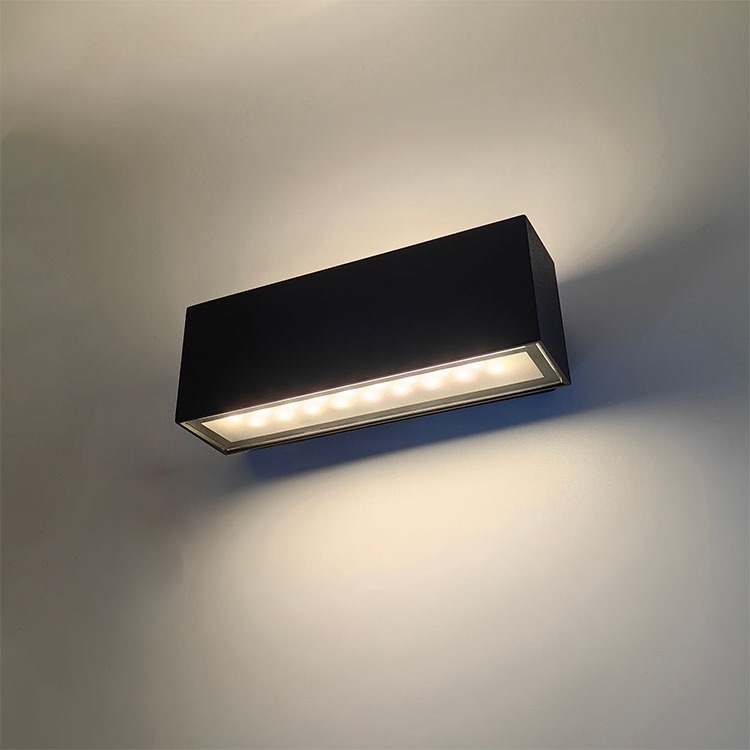
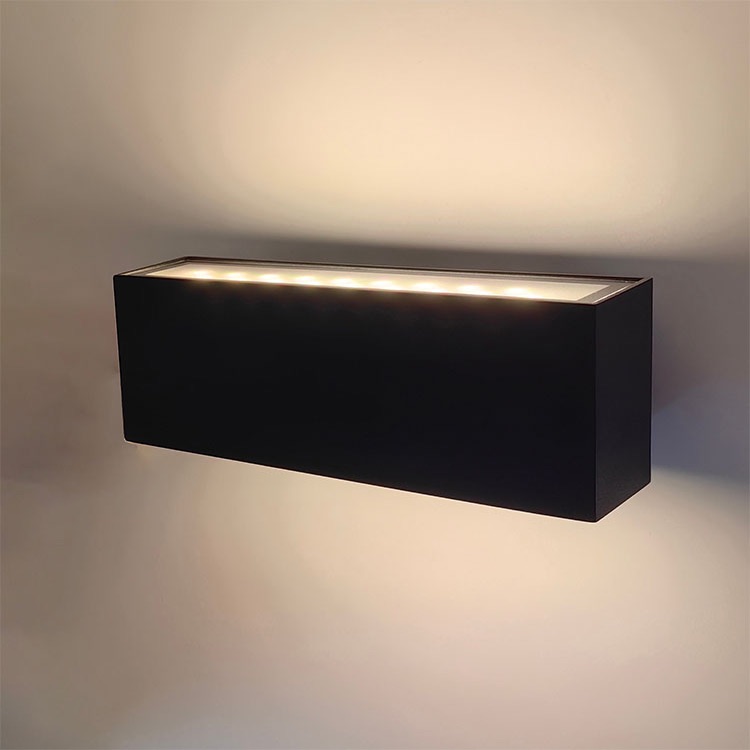
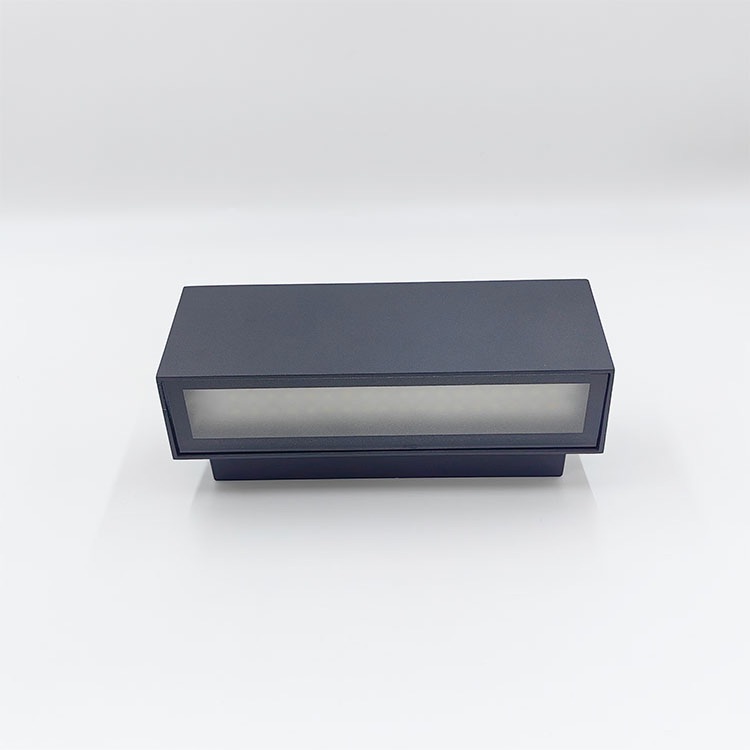
Outdoor sourcing is less forgiving. IP rating, corrosion resistance, gasket quality, screw material, surge protection, powder coating, and driver temperature all matter.
A wall light exposed to rain, dust, salt air, or freeze-thaw cycles needs more than “IP65” in a catalog. Ask for the test basis, installation orientation, drainage logic, and whether the fixture is rated for wet location in the destination market.
The Compliance Trap: “UL CE Certified” Is Sloppy Language
“UL CE certified” sounds good, but it is often a warning sign.
UL and CE are not the same thing, and a supplier who mashes them together may be speaking marketing English instead of compliance English. UL Solutions lists UL 1598 for luminaires and UL 8750 for LED equipment used in lighting products, while IEC 60598 is a common luminaire standard reference outside North America (UL Lighting Standards and Certification).
CE is different. CE marking is generally based on the manufacturer’s declaration that the product meets applicable EU requirements, supported by a technical file. The European Commission states that ecodesign rules for lighting products are mandatory for manufacturers and importers selling in the EU, and Regulation (EU) 2019/2020 has applied from 1 September 2021 for light sources and separate control gears (European Commission Light Sources).
So what should you ask for?
Not vibes. Paper.
US Project Documentation Checklist
For the United States, request:
UL or ETL listing path where required
UL 1598 luminaire evidence where applicable
UL 8750 LED equipment/driver relevance where applicable
FCC/EMC information if electronic drivers are involved
DLC QPL listing if the project is rebate-driven
LM-79 photometric and electrical test reports
LM-80/TM-21 support when lifetime claims need backing
IES files for AGi32, Visual, or other lighting calculation workflows
Installation instructions and wiring diagrams
Damp/wet location rating evidence when applicable
EU Project Documentation Checklist
For European projects, request:
CE Declaration of Conformity
Low Voltage Directive 2014/35/EU support where applicable
EMC Directive 2014/30/EU support
RoHS documentation
Ecodesign Regulation (EU) 2019/2020 support
Energy labelling review under Regulation (EU) 2019/2015 where the product is a light source or contains one
LDT files for DIALux
Technical file summary
Importer information and traceability labels
DALI-2, D4i, or 0–10V driver documentation if controls are specified
The European Commission also notes that the energy label for luminaires has been discontinued since 25 December 2019, although certain luminaires may still meet the definition of a light source and require labelling under Regulation (EU) 2019/2015 (European Commission Light Sources). That sentence alone can prevent a bad argument between a buyer, importer, and project consultant.
The Files That Separate Real Suppliers From Catalog Sellers
A real LED fixture supplier should be able to send a submittal pack.
No drama.
For US and European projects, I would not approve a commercial LED lighting fixtures supplier without reviewing the documentation workflow. This is why a dedicated LED lighting resources and submittal pack page is useful: it points the buyer toward IES/LDT photometrics, BIM/Revit files, cut sheets, LM-79 reports, DLC QPL support, CE/RoHS documentation, and DALI or 0–10V wiring diagrams.
That is not decoration. That is procurement survival.
Here is what I would request before placing a bulk order:
Document
Why It Matters
Red Flag
IES/LDT file
Shows beam distribution for lighting calculations
File does not match exact model
LM-79 report
Verifies photometric and electrical performance
Report is old, edited, or from another SKU
Cut sheet
Confirms dimensions, lumen output, CCT, CRI, power
Missing ordering codes
Wiring diagram
Prevents site installation errors
Generic driver drawing only
CE Declaration
Needed for EU market access
No responsible manufacturer/importer data
UL/ETL evidence
Needed for many North American projects
“UL driver” presented as “UL fixture”
BOM/version control
Keeps repeat orders consistent
Supplier refuses to lock components
Packaging spec
Reduces shipping damage
Weak carton, no drop-test logic
I will say the quiet part: “UL driver” does not mean “UL listed luminaire.”
The same goes for CE. A CE logo printed on a label is not proof. Ask for the Declaration of Conformity, applied directives, test reports, model list, responsible party, and technical file logic.
Price Is Not the Cost: The Real Math of LED Lighting Procurement
Cheap fixtures can be expensive.
Very expensive.
When buyers compare LED lighting procurement quotes, they usually compare EXW or FOB unit price. That is lazy math, and in commercial projects it leads to bad sourcing decisions because the real cost includes freight, duties, testing, rework, site delays, failed inspections, replacement labor, spare drivers, damaged cartons, and reputation damage. Why pretend the invoice is the whole story?
A buyer should calculate landed and installed risk:
A $14 downlight that fails documentation review may cost more than a $19 downlight that arrives with IES, cut sheet, wiring diagram, CE file, and stable packaging. A $38 track head with poor dimming compatibility may be worse than a $46 model with a known 0–10V or DALI driver. A $72 linear fixture with inconsistent diffuser color can poison a 200-fixture office job.
The DOE’s Gateway-style airport research has shown LED implementation can create meaningful savings, but also that actual results depend on application and fixture selection. In one Philadelphia International Airport apron lighting study, full LED implementation savings were calculated between 24.5% and 51.5%, depending on the fixture mix (DOE Philadelphia Airport LED Study).
That range matters. It says procurement choices change the outcome.
Supply Chain Risk Is No Longer a Back-Office Topic
The old sourcing model was simple: find a factory, negotiate price, ship containers.
That model is aging badly.
In 2026, supply chain compliance can hit even sophisticated clean-energy buyers. Reuters reported that solar panels made up the vast majority of shipment value stopped at the U.S. border under forced-labor enforcement data, with semiconductor-device shipments accounting for $3.26 billion, or 82% of the $3.94 billion in stopped shipments since UFLPA implementation in 2022 (Reuters on UFLPA import seizures). Lighting fixtures are not solar panels, but the lesson travels: customs, compliance, and origin documentation are now commercial issues, not moral side conversations.
So ask LED lighting suppliers for:
Factory legal name and export entity
Production address
Component origin for drivers, LED chips, aluminum housings, and PCBs
Packaging and labeling control
HS code guidance
Conflict mineral or forced-labor policy if required by the buyer
Traceability by production batch
Serial number or lot-code format
Warranty claim workflow
Do not overcomplicate it. But do not ignore it.
The professional buyer does not need to accuse anyone. The professional buyer needs records.
OEM, ODM, and Private Label: Choose the Right Model Before You Ask for Samples
OEM and ODM get abused in LED sourcing conversations.
OEM usually means you already have a mature spec and need a supplier to manufacture it reliably. ODM means you need engineering help to shape the product configuration, optics, housing, beam, driver, and finish before production. For buyers building a channel line or a project-specific fixture, the difference matters.
A factory with OEM and ODM LED lighting services is most useful when it can help with optics, glare control, driver selection, private label packaging, SKU labeling, and BOM stability. The site’s service page explicitly separates build-to-spec OEM work from co-development ODM work, which is the right way to think about it.
Here is my bias: if you are entering a new market, start with ODM support but lock the final SKU like OEM.
That means you can use the supplier’s engineering input during development, then freeze the key parts before rollout:
LED chip brand and bin
Driver model
Lens or reflector
Diffuser material
Housing alloy and finish
Thermal structure
Dimming protocol
Cable and connector type
Packaging design
Label and barcode format
Test and QC checkpoints
The amateur buyer asks, “Can you customize?”
The professional buyer asks, “Which changes affect certification, photometrics, lead time, MOQ, and repeat-order consistency?”
A Practical Supplier Vetting System I Would Actually Use
I would not begin with a factory audit.
I would begin with a document audit, because weak suppliers expose themselves fast when asked for exact files tied to exact SKUs. A factory can clean the showroom for a video call. It cannot fake a disciplined submittal workflow for long.
Step 1: Ask for One Exact Model, Not a Catalog
Pick a specific fixture type: 12W anti-glare downlight, 30W adjustable track light, 40W linear grille fixture, 60W outdoor wall light, or a project-specific recessed linear model.
Then ask for:
Datasheet
IES or LDT file
Wiring diagram
Installation sheet
Compliance file list
Packaging photo
Label artwork
MOQ and lead time
Available CCT/CRI/beam options
Driver options and dimming compatibility
If they send a messy folder with unrelated filenames, pause.
Step 2: Cross-Check the Technical Claims
For LED lighting fixtures, I look hard at these numbers:
Order samples from the same configuration you plan to buy.
Not “similar.” Same.
Test beam shape, glare, dimming behavior, audible noise, flicker, finish, driver temperature, mounting hardware, packaging, and label accuracy. For high-value projects, send samples to a third-party lab or at least conduct a basic incoming inspection with photos, measurements, and power readings.
Step 4: Lock the Production Version
Before mass production, require:
Golden sample approval
Signed specification sheet
BOM freeze
Packaging approval
Label approval
QC checklist
Pre-shipment inspection standard
AQL level, if used
Spare driver/accessory policy
Replacement process for early failures
This is where many buyers get uncomfortable because it feels slow.
But slow before production is cheaper than panic after delivery.
What a Good US/EU Project Supplier Looks Like
A good supplier does not merely say yes.
A good supplier pushes back when your spec conflicts with reality, because 3000K, CRI 90, narrow beam, high lumen output, tiny housing, low glare, low cost, long warranty, short lead time, and universal dimming may not all fit into one fixture without trade-offs. That pushback is a sign of competence.
For commercial LED lighting fixtures, I like suppliers who can show:
Application-specific product families
Clear distinction between downlights, track lights, linear lights, spotlights, ceiling lights, magnetic track, and outdoor fixtures
Project references or case-study structure
Fast access to submittal documents
OEM/ODM capability
Batch consistency controls
Realistic lead times
Compliance awareness for the US and Europe
Contact access for engineering or documentation questions
The commercial LED lighting projects page is worth using inside this buyer journey because it frames projects by retail, office, hospitality, industrial, and outdoor applications. That matters for SEO, but more importantly, it matches how professional buyers think.
They do not buy “lights.”
They buy fixtures for a site condition.
The Procurement Email I Would Send to an LED Supplier
Use this. Steal it.
Subject: LED Fixture Sourcing Request for US/EU Commercial Project
Hello,
We are sourcing LED lighting fixtures for a commercial project in the US/EU market. Please quote and confirm documentation availability for the exact models below.
Project details:
Application:
Country/region:
Fixture type:
Quantity:
Target wattage/lumen:
CCT:
CRI:
Beam angle:
Dimming/control:
Mounting type:
IP/IK requirement:
Finish:
Target lead time:
Certification/documentation required:
Please provide:
Datasheet/cut sheet
IES or LDT file
LM-79 report if available
Wiring diagram
Installation instructions
CE/RoHS/LVD/EMC documentation for EU, if applicable
UL/ETL/DLC information for US, if applicable
Driver brand/model
LED chip brand/binning information
Warranty terms
MOQ, sample cost, production lead time
Packaging details
HS code suggestion
Photos of product label and carton label
Please confirm whether the quoted product matches the tested/documented model exactly.
Best regards,
That last sentence is the trapdoor: “matches the tested/documented model exactly.”
A serious supplier answers it. A weak supplier dodges.
FAQs
What is the best way to source LED lighting fixtures for US and European projects?
The best way to source LED lighting fixtures for US and European projects is to qualify suppliers by application fit, compliance documents, photometric files, driver options, batch consistency, and landed cost before negotiating bulk price. Buyers should request exact-model datasheets, IES/LDT files, CE or UL-related evidence, wiring diagrams, and production-version controls.
Start with one fixture family, one exact SKU, and one real project condition. Then test the supplier’s response speed, file quality, and technical honesty. If the supplier cannot support submittals, they are not ready for serious commercial LED lighting procurement.
What documents should I request from LED lighting suppliers?
You should request a datasheet, IES or LDT photometric file, LM-79 report where available, wiring diagram, installation sheet, compliance declaration, driver specification, product label, packaging details, warranty terms, and BOM confirmation. These documents help prove that the quoted LED fixture can pass design review, import checks, installation, and future maintenance.
For US projects, ask about UL/ETL and DLC relevance. For European projects, ask about CE, LVD, EMC, RoHS, Ecodesign, and energy-labelling obligations. Do not accept generic files unless they clearly match the exact model being purchased.
Are CE and UL certifications the same for LED fixtures?
CE and UL are not the same for LED fixtures; CE marking relates to EU conformity obligations, while UL certification relates to safety testing and certification pathways commonly used in North America. A fixture may need different documents, labels, test reports, and responsible-party information depending on whether it is sold into the US, Canada, the EU, or the UK.
A common mistake is treating a UL-recognized driver as proof that the whole luminaire is UL listed. Another mistake is assuming a CE logo proves compliance. Ask for complete files, model references, and applied standards.
How do I compare LED fixture quotes from different factories?
You compare LED fixture quotes by checking the exact specification behind the price, including lumen output, CCT, CRI, beam angle, driver model, dimming protocol, housing material, compliance files, packaging, warranty, lead time, and landed cost. A cheaper quote is not better if it creates approval delays, field failures, or inconsistent repeat orders.
Create a quote matrix and force every supplier to answer the same fields. If one quote includes LM-79 data, stable driver selection, and export packaging while another quote only gives wattage and price, they are not equal offers.
What are the biggest risks when sourcing LED fixtures from China?
The biggest risks when sourcing LED fixtures from China are mismatched documentation, component substitution, inconsistent CCT bins, weak drivers, unclear compliance claims, poor packaging, unrealistic lead times, and limited traceability. These risks are manageable when buyers lock the specification, approve golden samples, verify files, and require production-level quality control before shipment.
China is not the problem. Lazy sourcing is the problem. A disciplined buyer can work well with Chinese LED lighting suppliers, but only by replacing trust-based buying with evidence-based procurement.
Your Next Steps
Do not ask for a catalog first.
Send a project brief, choose one exact fixture family, and request a complete submittal pack before discussing volume price. If your project involves downlights, track fixtures, recessed linear lights, commercial ceiling products, or outdoor LED lighting fixtures for the US or Europe, start with supplier evidence: photometrics, compliance files, drawings, driver data, and production controls.
For a practical next move, review the fixture categories, then request model-specific files through the supplier’s LED lighting resources and submittal support or contact the team through the commercial LED lighting manufacturer page with your project country, fixture type, quantity, CCT/CRI target, beam angle, dimming requirement, and compliance expectations.