15 LED Fixture Specifications Contractors Should Check
Most LED fixture mistakes are not caused by bad LEDs. They are caused by weak submittals, vague spec sheets, unverified drivers, sloppy CCT/CRI assumptions, and missing compliance proof.
I’ll say the unpopular part first: most LED fixture problems are visible before the fixture ships.
Specs decide margins.
When a contractor accepts a thin LED fixture spec sheet without checking output, driver behavior, color tolerance, photometric files, mounting details, dimming protocol, warranty exclusions, and certification evidence, the job risk does not disappear; it simply moves from the purchasing desk to the ceiling, where it becomes labor, callbacks, change orders, and client anger. Why let a two-page PDF make decisions for a six-figure project?
The bigger market story supports the pressure contractors already feel. The U.S. Department of Energy says LED lighting can use at least 75% less energy and last up to 25 times longer than incandescent lighting, while LED energy savings could reach 569 TWh annually by 2035, equal to the output of more than 92 large 1,000 MW power plants, according to DOE Energy Saver.
But here is the hard truth: energy savings do not protect you from bad glare, poor dimming, ugly color shift, noisy drivers, incompatible controls, weak heat sinking, or a fixture that cannot pass local inspection.
0–10V, DALI-2, Triac, PWM, CCR, DMX, Bluetooth mesh
“Dimmable” with no protocol
Wiring diagram, compatibility list
11. Power factor and THD
PF ≥0.90 and low THD for commercial loads
No electrical quality data
Driver test report
12. Thermal management
Aluminum housing, heat sink design, Tc point
Plastic-heavy body on high-output fixtures
Thermal test, Tc limit
13. Rated life
L70, L80, TM-21 projection, driver life
“50,000 hours” with no conditions
LM-80/TM-21 support
14. IP / IK rating
IP20 indoor, IP44 damp, IP65 outdoor, IK rating where impact matters
Outdoor use claimed without IP test
IP/IK test certificate
15. Certification and compliance
UL/ETL, CE, RoHS, EMC, LVD, DLC QPL when relevant
“Can pass” instead of “tested/listed”
Certificate, listing number
DOE’s Federal Energy Management Program sets commercial and industrial LED luminaire efficiency guidance by fixture type; its June 2023 acquisition page lists examples such as 140 lm/W for commercial 2 ft. x 4 ft. troffers and 175 lm/W for industrial high bays, while also estimating up to $161 in lifetime savings for the best available 2 ft. x 4 ft. LED luminaire model. See the DOE FEMP commercial and industrial LED luminaire guidance.
So yes, lm/W matters. But not alone.
Lumens, Watts, CRI, and CCT: The Numbers Everyone Quotes, Usually Badly
Contractors hear the same four terms again and again: lumens, wattage, CRI, and CCT.
Fine. Start there.
But the trap is thinking those four numbers tell the whole story. A 40W fixture at 4,800 lm sounds efficient. A 3000K CRI 90 downlight sounds premium. A 36° beam sounds controlled. Then the fixtures arrive, the beam is harsh, the trim color is off, the dimmer buzzes, and the client says the space “feels cheap.”
I have reviewed enough contractor-facing submittal language to distrust any LED light fixture specifications that lead with wattage and hide the rest.
Delivered Lumens Beat Chip Lumens
Delivered lumens are measured from the complete fixture after optical, lens, reflector, diffuser, and driver losses. Chip lumens are fantasy accounting unless clearly labeled.
CCT means correlated color temperature, measured in Kelvin. A 2700K fixture reads warm. A 3000K fixture works in hospitality. A 3500K or 4000K fixture often fits commercial interiors. A 5000K fixture can work in warehouses, clinics, or task-heavy spaces, but it can also make a boutique look like a storage room.
Bad CCT selection is not a technical mistake. It is a client-facing mistake.
CRI Is Useful, But TM-30 Tells More
CRI still appears on almost every LED fixture spec sheet, usually as CRI 80 or CRI 90. I check it, but I do not worship it.
For retail, galleries, hotel corridors, and product displays, ask for TM-30 data when color fidelity matters. The GSA’s LED and controls guidance notes that TM-30 uses 99 color evaluation samples and includes Rf, Rg, and gamut information, giving more color detail than the older eight-color CRI method. Its same guidance also flags common CCT ranges such as 1800–2700K warm and 4500–6500K cool. See the GSA LED Lighting and Controls Guidance for Federal Buildings.
Glare, Beam Control, and the Lie of “Bright Enough”
Bright is easy. Comfortable is harder.
A cheap LED fixture can hit the lumen target and still be a bad fixture. I know that sounds harsh, but contractors lose fewer arguments when they separate brightness from visual comfort.
For commercial anti-glare LED downlights, ask about recessed aperture depth, cut-off angle, lens material, reflector finish, UGR performance, and whether the optical design changes by beam angle. A 15° accent optic and a 60° general optic should not be treated like cosmetic options.
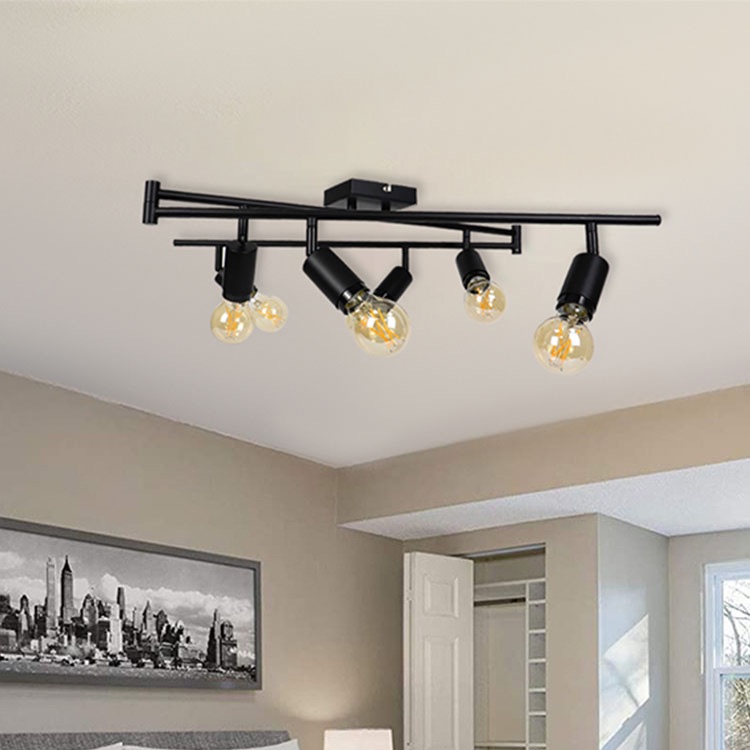
Track lights deserve even more suspicion. In retail, galleries, and showrooms, a poorly controlled beam exposes every shortcut: scalloping on walls, hot spots on merchandise, glare in sightlines, and uneven color across the floor. For adjustable accent applications, check options like modern LED track lighting fixtures with controlled optics before you approve a fixture family.
And please do not approve “low glare” as a phrase without a number, drawing, lens detail, sample, or photometric file.
Drivers and Controls: Where the Cheap Fixture Betrays the Job
The LED module gets the glory. The driver causes the callback.
I do not trust a commercial LED lighting specification until I know the driver type, dimming method, input voltage, surge protection, power factor, THD, operating temperature, control compatibility, and wiring diagram.
A fixture marked “dimmable” is not enough. Dimmable how?
0–10V is common in commercial interiors. DALI and DALI-2 are common in higher-control projects. Triac or phase dimming can work in residential-style spaces, but it must match the dimmer and load conditions. PWM and CCR affect dimming behavior differently. Some systems drop out at low levels. Some flicker on camera. Some hum. Some never quite turn off.
The contractor usually gets blamed.
ASHRAE’s 90.1 material shows why controls are not optional decoration anymore. ANSI/ASHRAE/IES Standard 90.1 is described as a benchmark for commercial building energy codes, and ASHRAE’s 2022 lighting-change summary reports a 4% reduction in interior lighting power density values compared with 2019, with lighting controls and reduced lighting power contributing to building energy savings. See ASHRAE Standard 90.1 and the ASHRAE Journal lighting changes summary.
The takeaway is blunt: if the controls are not specified, tested, and documented, they are not designed. They are guessed.
Thermal Design, Rated Life, and the 50,000-Hour Fairy Tale
“50,000 hours” is one of the most abused phrases in LED fixture specifications.
What temperature? What ambient? What drive current? What driver life? What lumen maintenance method? What failure definition? What installation condition?
A fixture can have an LED package capable of long life and still fail early because the driver cooks inside a tight ceiling plenum. A downlight can pass a showroom sample review and drift in color after months of heat. A high-output linear fixture can look excellent on day one and lose output faster than the client expects because thermal design was treated as a metal-housing sales claim.
Ask for LM-80 and TM-21 support where relevant. Ask for Tc point guidance. Ask whether the rated life refers to L70, L80, or another lumen-maintenance threshold. Ask whether the driver warranty matches the LED module warranty.
If a supplier cannot explain the thermal path from LED board to housing to ambient air, I would not treat the rated life as a project number. I would treat it as a wish.
For customized project SKUs, this is exactly where OEM and ODM LED lighting support should be tested: not by asking whether they can change the trim color, but by asking whether they can preserve output, driver compatibility, heat performance, and compliance documentation after changing the product configuration.
Real Case Studies: LED Savings Are Real, But Only When Specs Are Real
The good news: serious LED upgrades do save serious money.
The bad news: savings headlines do not excuse weak fixture selection.
At the James V. Forrestal Building in Washington, D.C., the DOE reported a $2.3 million LED lighting upgrade covering more than 30,000 fixtures, reducing lighting energy consumption by 50%, with the project self-funding in under 12 years. That is not brochure fluff; it is a federal building case study. Read the DOE Forrestal Building ESPC ENABLE project.
The DOE’s commercial lighting campaign also reported hard numbers: CKE Restaurant Holdings submitted 157 sites with average savings of 53%, totaling 1.9 million kWh, while Cleveland Clinic achieved 2.6 million kWh in one-year savings and a 55% reduction compared with existing data. See the DOE commercial lighting upgrade recognition data.
That is why I push contractors to demand full LED fixture specifications before price approval. A cheap fixture that misses the lighting intent is not value engineering. It is future labor with a lower purchase order.
How to Read an LED Fixture Spec Sheet Without Getting Played
Start with the application, not the fixture.
A corridor fixture, retail spotlight, office linear light, hotel downlight, warehouse high bay, façade light, and magnetic track module all fail in different ways. The fixture must be judged against space type, ceiling height, operating hours, energy code, dimming controls, maintenance access, ambient temperature, and visual expectation.
Here is my practical order:
First, confirm the fixture family and application. A product listed under commercial use should match the actual space, not merely fit the cutout.
Second, check delivered lumens, wattage, lm/W, IES file, and layout assumptions. Never let the catalog image do photometric work.
Third, check CCT, CRI, TM-30 if needed, SDCM, and batch consistency. Color mismatch is painfully visible in repeated ceiling grids.
Fourth, check beam angle, glare control, diffuser, reflector, and UGR claims. Comfort cannot be repaired after installation without replacing parts.
Fifth, check driver brand, protocol, dimmer compatibility, PF, THD, surge protection, and wiring. “Dimmable” is not a submittal answer.
Sixth, check mounting, cutout, ceiling compatibility, insulation contact rules, emergency options, IP/IK rating, and service access.
Seventh, check certification evidence. UL/ETL for North America, CE/LVD/EMC/RoHS for EU-type requirements, and DLC QPL where rebate or procurement rules demand it.
Eighth, ask for the submittal package before the job is urgent. Chinese LED Light’s site already frames the right document set: IES/LDT photometrics, BIM/Revit support where available, LED lighting spec sheets, LM-79 reports, DLC QPL status when model-dependent, CE/RoHS files, and DALI or 0–10V wiring diagrams. That is the kind of proof package contractors should request through a project lighting quotation and spec-sheet request.
FAQs
What are LED fixture specifications?
LED fixture specifications are the measurable electrical, photometric, mechanical, thermal, optical, control, and compliance details that define how an LED luminaire performs in a real installation. They include delivered lumens, wattage, efficacy, CCT, CRI, beam angle, glare control, driver type, dimming protocol, IP rating, rated life, and certification evidence.
Contractors should treat these specs as the technical contract between the design intent, supplier promise, installer responsibility, and final client expectation.
How do contractors read an LED fixture spec sheet?
Contractors read an LED fixture spec sheet by checking whether the listed performance data matches the installed application, control system, ceiling condition, operating hours, code requirements, and visual target. The first review should verify delivered lumens, wattage, IES files, driver data, dimming compatibility, CCT/CRI, beam control, mounting dimensions, and certifications.
Do not read only the headline wattage. The small technical rows usually expose the risk.
Which LED fixture specifications matter most for commercial projects?
The most important LED fixture specifications for commercial projects are delivered lumens, system wattage, lm/W efficacy, CCT, CRI or TM-30, SDCM, beam angle, glare control, driver type, dimming protocol, power factor, THD, thermal design, rated life, IP/IK rating, and safety or market-access certification.
For offices, I look hardest at glare, controls, and color consistency. For retail, I look hardest at beam quality, CRI/TM-30, and batch matching. For outdoor work, I care about IP rating, corrosion resistance, surge protection, and serviceability.
What LED lighting specifications should contractors ask suppliers for before ordering?
Contractors should ask suppliers for a complete submittal pack before ordering, including the fixture spec sheet, IES or LDT photometric files, wiring diagram, driver model, dimming compatibility list, LM-79 test data, LM-80/TM-21 support, certification documents, installation instructions, warranty terms, and any DLC, CE, RoHS, UL, or ETL evidence required by the project.
If the supplier cannot provide the proof before payment, assume the missing document will become your problem later.
Are lumens, wattage, CRI, and CCT enough to approve an LED fixture?
Lumens, wattage, CRI, and CCT are not enough to approve an LED fixture because they do not fully describe glare, beam distribution, color consistency, driver behavior, dimming compatibility, thermal performance, safety listing, installation fit, or long-term lumen maintenance. They are starting numbers, not a complete specification.
I would rather approve a boring fixture with complete evidence than a flashy fixture with missing test data.
Your Next Steps: Ask for Evidence Before You Approve the Fixture
Before you approve any LED fixture specifications, ask for the full submittal package: spec sheet, IES/LDT file, driver data, wiring diagram, certification proof, color consistency details, thermal assumptions, warranty terms, and installation drawings.
Then compare that data against the actual project conditions.
If you are sourcing for a commercial rollout, office renovation, retail display, hotel corridor, or custom fixture program, send the model, ceiling condition, target CCT/CRI, dimming system, country, and project quantity through the Chinese LED Light contact page and request the documents before price negotiation.