Common Mistakes When Selecting Commercial LED Fixtures
Commercial LED Fixtures fail in real projects when buyers chase watts, ignore glare, skip IES files, mix color temperatures, or trust catalog claims without proof. Here is the hard-nosed selection guide I wish more project teams used before approving a fixture schedule.
I have watched good contractors, sharp procurement managers, and experienced architects approve Commercial LED Fixtures that looked fine on a PDF but failed in the room because nobody asked where the light actually landed, how the driver behaved at low dimming, or whether the supplier could repeat the same CCT bin six months later. Why does this keep happening?
Because the LED market rewards speed. Not accuracy.
The U.S. Department of Energy says LED lighting is already the most energy-efficient and fast-developing lighting technology, with potential U.S. savings above 569 TWh annually by 2035 if adoption continues broadly, according to its LED Lighting guidance. That is the shiny headline. The uglier truth is that energy savings only materialize when the fixture, optics, controls, layout, and installation conditions work together. A cheap “equivalent wattage” swap can still create glare, dark aisles, poor shelf visibility, early driver failures, and angry tenants.
And this is not a small operating issue. The U.S. Energy Information Administration’s Commercial Buildings Energy Consumption Survey reported 5.9 million U.S. commercial buildings consuming 6.8 quadrillion Btu and spending $141 billion on energy in 2018. Lighting decisions sit inside that bill, and every bad fixture schedule quietly taxes the building for years.
So here is my blunt position: most commercial LED lighting mistakes are not “technical mistakes.” They are buying mistakes dressed up as technical decisions.
If you are comparing commercial LED lighting fixtures only by watts, price, and warranty years, you are not selecting lighting. You are gambling.
The Mistake Matrix: What Buyers Think They Bought vs. What They Actually Specified
Common Mistake
What Buyers Think They Bought
What They Actually Specified
What I Would Demand Before Approval
Choosing watts over delivered lumens
“A brighter, more efficient fixture”
Unknown light on the task surface
LM-79 report, IES file, fixture efficiency, lumen maintenance data
Ignoring beam angle and spacing
“Same quantity, same layout”
Hot spots, dark zones, poor uniformity
Photometric layout with mounting height, spacing, reflectance, workplane height
Treating CCT as decoration
“Warm or cool light”
Brand mismatch, batch drift, visual discomfort
CCT, CRI, R9 where relevant, SDCM/binning controls
Skipping dimming compatibility
“Dimmable fixture”
Flicker, pop-on, dropout, control complaints
Driver spec, dimming curve, 0–10V/DALI/triac compatibility test
Buying undocumented imports
“Good price”
Inspection risk and weak project handover
Safety certification path, RoHS/CE/UL/ETL support, test reports
Forgetting maintenance access
“Long-life LED”
Expensive labor later
Replaceable driver plan, warranty terms, spare parts policy
I know the table sounds basic. That is the point.
Most project failures start with basic omissions: no real IES photometric file, no driver compatibility confirmation, no batch color control, no clear warranty replacement process, and no discussion of maintenance access until the ceiling is already closed. If you want the deeper technical checks, the site’s technical deep dives on LM-79, LM-80, TM-21, DALI-2, and IES files are the sort of reading procurement teams should do before they negotiate price, not after a failure.
Mistake #1: Confusing Watts With Light
Watts are not brightness. Full stop.
A 40W commercial fixture can outperform a 60W fixture if the optics are cleaner, the LED package is better, the driver is efficient, and more light reaches the useful plane instead of dying inside a lens, louver, or badly designed housing. But buyers still ask, “What wattage replaces my old fixture?”
Wrong first question.
The better question is: how many maintained lux or foot-candles do we need on the working surface, and what beam distribution gets us there without glare?
That is where lumens vs watts LED lighting becomes real. Lumens measure output. Watts measure input. Delivered illuminance measures whether people can actually see. Those are not the same thing.
The Illuminating Engineering Society says its Lighting Applications Standards Collection includes recommended illuminance criteria for commercial, industrial, retail, office, hospitality, roadway, and other applications through resources like RP-1, RP-2, RP-7, and RP-9 in the IES Lighting Library. I care about that because fixture selection is not a catalog contest. It is an application decision.
A warehouse aisle, hotel corridor, office desk zone, retail display wall, stairwell, and car showroom should not be lit by the same logic. They may all use Commercial LED Fixtures, but they do not need the same beam angle, shielding, CCT, CRI, mounting method, or control sequence.
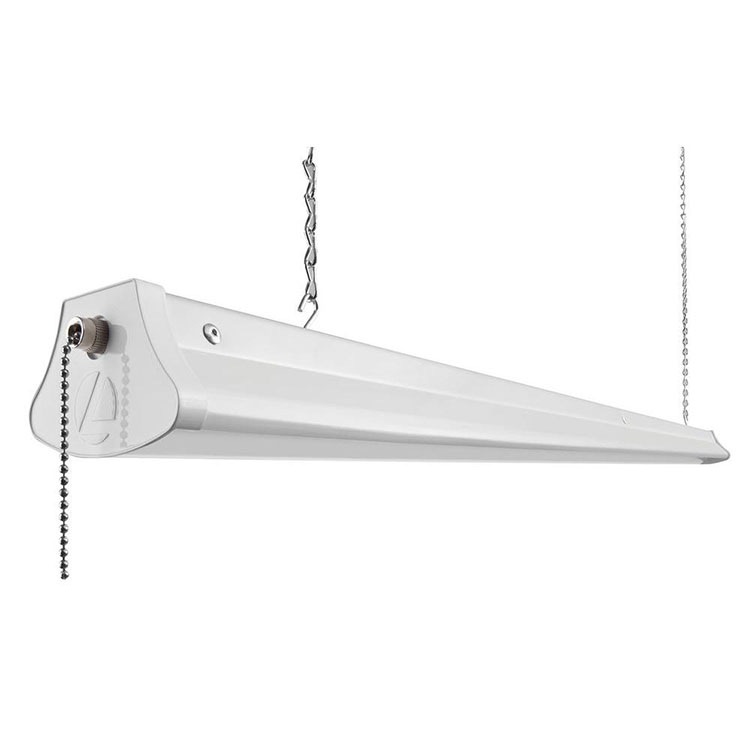
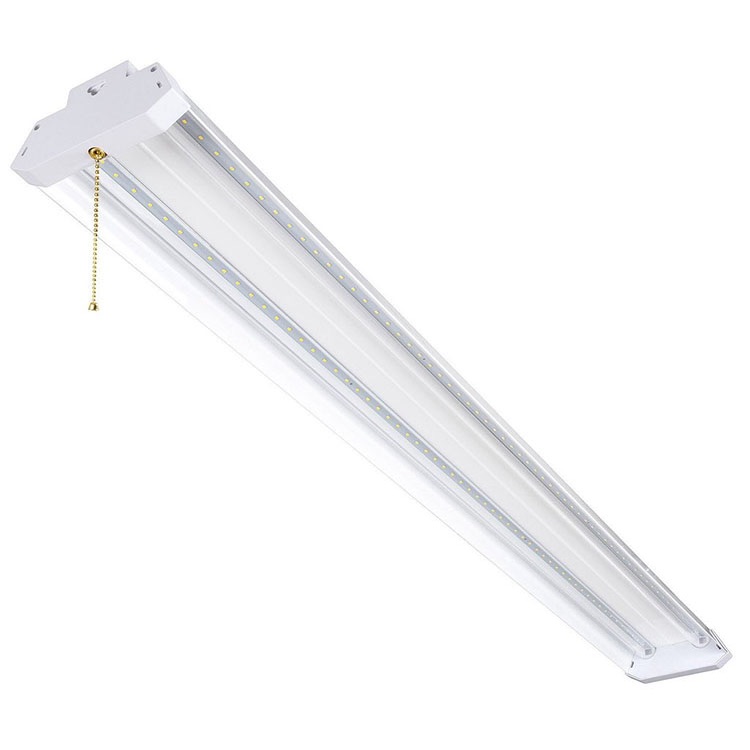
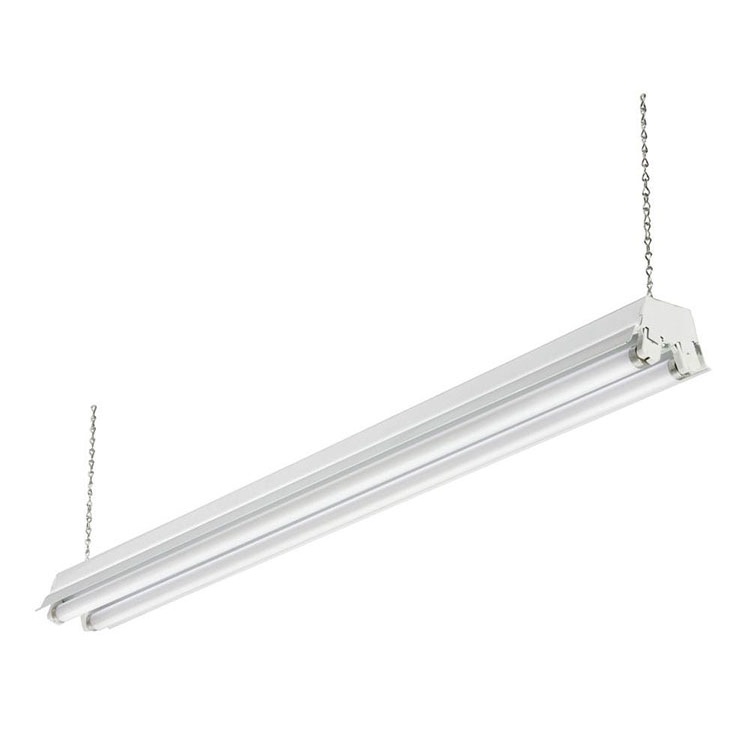
If you are sourcing long, uniform ceiling runs, review LED linear lighting options with actual distribution data. If you need flexible accenting for retail or gallery changes, LED track lighting will usually give you a better aiming strategy than fixed downlights. But do not pick either family blindly.
Mistake #2: Treating Color Temperature Like a Paint Swatch
Color temperature sells emotions. It also creates arguments.
I have seen 3000K fixtures approved for a hospitality corridor, then a later replacement batch arrived looking slightly green, slightly cold, and completely wrong next to the original installation. Nobody wanted to admit the real issue. The original quote said “3000K.” It did not define tolerance, binning, Duv behavior, or what would happen on repeat orders.
That is amateur hour.
Commercial LED color temperature for commercial spaces should be chosen by application, surface material, brand intent, and occupant comfort. Broadly, 2700K to 3000K leans warm and relaxed. 3500K often works in mixed office and hospitality zones. 4000K is common for offices, retail, education, and general commercial interiors. 5000K can fit warehouses, inspection areas, task-heavy zones, and some industrial spaces, though it can feel harsh if overused.
But CCT alone is not enough. Ask about CRI. Ask about R9 if reds matter. Ask about SDCM. Ask whether repeat batches can stay visually consistent.
The DesignLights Consortium’s SSL V5.1 technical requirements pushed harder on quality-of-light issues such as spectral quality, light distribution, glare, and controllability for high-performance commercial lighting products. That matters because real commercial LED fixture selection is no longer just an efficacy race. It is a quality-control fight.
Here is the hard truth: “Best commercial LED light fixtures” does not mean the brightest fixture. It means the fixture that can repeat the intended visual result across rooms, sites, phases, and reorders.
Mistake #3: Ignoring Glare Until People Start Complaining
Glare is expensive because it hides behind approval drawings.
You can meet a target lux level and still create a miserable space. Open office staff know this. Retail staff know this. Hotel operators know this. Anyone who has worked under a cheap bare-lens high bay knows this in their bones.
This is where commercial lighting layout and spacing become part of the product. A fixture with a shallow lens, high luminance, poor shielding, or the wrong beam angle can turn a “successful” energy retrofit into a complaint machine.
I do not trust a fixture schedule unless it answers these questions:
What is the mounting height?
What is the workplane height?
What are the reflectance assumptions for ceiling, wall, and floor?
What is the target uniformity ratio?
Are we evaluating direct glare, reflected glare, or both?
Is the fixture recessed, suspended, surface-mounted, track-mounted, or wall-mounted?
Can the supplier provide an IES file that matches the exact SKU, lens, beam, wattage, and CCT?
OSHA’s shipyard lighting standard is not a universal commercial design guide, but it shows how regulators think about minimum illumination in work areas: its 1915.82 lighting standard lists minimum lighting intensities such as 5 foot-candles for certain corridors, exits, stairs, walkways, and assigned work areas, 10 foot-candles for landside shops and warehouses, and 30 foot-candles for offices and first aid areas. Minimums are not design excellence, but they remind us that light levels have safety consequences.
And no, “it looks bright” is not a measurement.
Mistake #4: Skipping Controls Until Install Day
Controls are not accessories. They are strategy.
The best commercial LED light fixtures can still perform badly if the controls are wrong. I have seen 0–10V dimming specified vaguely, then drivers from different batches dimmed at different rates. I have seen “DALI compatible” products behave badly because nobody checked protocol details, commissioning needs, or whether the installer had the tools to address fixtures properly.
The better projects start with controls early: occupancy sensing, daylight harvesting, scheduling, dimming zones, scene control, emergency logic, and whether the fixture driver supports the actual control architecture.
The U.S. Department of Energy’s Integrated Lighting Campaign gives useful evidence here. The New York Public Library’s Stephen A. Schwarzman Building replaced fluorescent bookstack fixtures with linear LEDs and integrated controls, achieving an estimated 1.1 million kWh annual energy reduction, $145,000 in annual energy cost savings, and 800 metric tons of reduced CO₂, according to the 2024 Integrated Lighting Campaign recognitions.
Another DOE-recognized project, Shiseido America, retrofitted warehouse and office lighting with LEDs and controls; the warehouse included 240 high-bay, aisle, and explosion-proof luminaires with occupancy sensors dimming to 30% during vacancy, saving an estimated 230,000 kWh annually and producing about $200,000 in reported cost savings. That is not brochure fluff. That is controls paying rent.
So when someone asks how to choose commercial LED lighting, my answer is simple: choose the control plan and the fixture together. Not sequentially. Together.
Mistake #5: Buying From the Cheapest Factory Instead of the Most Predictable One
Boring is good.
The most dangerous supplier is not always the one with the highest price. It is often the one with the cleanest sample and the messiest production discipline. A sample can be hand-built. A rollout cannot.
This is why I care about boring factory language: BOM lock, driver version control, CCT binning, aging tests, incoming material checks, packaging protection, submittal files, replacement policy, and whether the supplier can support the same SKU across phased deliveries.
If your project requires private labeling, custom optics, special beam control, DALI, 0–10V, color consistency, or region-specific documentation, use an OEM/ODM LED lighting factory process instead of pretending an off-the-shelf fixture will magically fit the spec. The page is relevant because commercial fixture selection often fails at the supplier-process level, not at the LED-chip level.
A professional factory should be able to discuss:
LM-79 photometric testing
LM-80 and TM-21 lifetime claims
Driver brand and temperature rating
Surge protection where needed
Flicker risk and dimming behavior
CE, RoHS, UL/ETL, or market-specific documentation pathways
DLC QPL requirements where rebates or U.S. project specs demand them
Packaging for export and site handling
Spare drivers and future reorder matching
I know buyers love a low unit price. I also know nobody remembers saving $4 per fixture when 300 units flicker in a retail chain rollout.
Mistake #6: Forgetting the Room Is the Final Test Lab
Commercial LED Fixtures do not live in catalogs. They live in dusty warehouses, glossy showrooms, warm ceiling cavities, humid corridors, retail ceilings with black paint, hotel lobbies with reflective stone, and offices full of monitor glare.
That means the room must shape the fixture decision.
If a project has high ceilings, narrow aisles, dark shelving, or reflective floors, you need a layout. If it has frequently changing merchandise, track or magnetic track may beat fixed downlights. If it has long office corridors, linear fixtures may deliver cleaner continuity. If it has exterior exposure, ingress protection, corrosion resistance, and surge protection become part of the conversation.
For similar real-world applications, it is worth reviewing commercial LED lighting projects and case studies before choosing a family. Project pages force a better question: “Where has this fixture type actually worked?”
That question saves money.
What I Would Check Before Signing a Fixture Schedule
I would not approve Commercial LED Fixtures without this checklist. Not anymore.
Fixture Performance
Check delivered lumens, system watts, efficacy, CCT, CRI, beam angle, UGR/glare approach, lens or reflector type, operating temperature, and lumen maintenance assumptions. If the supplier cannot match the IES file to the exact SKU, I treat the file as marketing until proven otherwise.
Layout Proof
Demand a lighting calculation for the real space, not a generic render. Include ceiling height, mounting type, spacing, reflectance, workplane height, target lux or foot-candles, uniformity, and any vertical illumination requirements for shelves, signage, faces, or machinery.
Controls Compatibility
Confirm the driver type and control protocol before purchasing. 0–10V, DALI-2, triac, PWM, phase-cut, occupancy sensors, daylight sensors, and emergency battery systems all have ways to become painful if treated casually.
Supplier Discipline
Ask how the factory controls batch-to-batch consistency. Ask what changes require buyer approval. Ask whether the driver, LED package, lens, PCB, housing finish, and packaging can be locked for repeat orders.
Documentation
Get the spec sheet, IES/LDT file, wiring diagram, installation guide, certification documents, warranty language, and maintenance plan before the deposit. If the job needs a formal submittal, do not “sort it out later.”
FAQs
What are the most common mistakes when selecting commercial LED fixtures?
The most common mistakes are choosing by wattage instead of delivered lumens, ignoring beam distribution and glare, mixing color temperatures across batches, skipping controls compatibility, accepting weak photometric files, and failing to match the fixture to mounting height, task type, maintenance access, and local code expectations. These errors usually look small during procurement, but they become expensive once the fixtures are installed across offices, warehouses, hotels, retail stores, or multi-site commercial rollouts.
How do I choose commercial LED lighting?
To choose commercial LED lighting, define the task, required illuminance, ceiling height, beam angle, glare limit, CCT, CRI, control method, warranty terms, certification pathway, and photometric proof before comparing price, because fixture cost means little without verified output and repeatable supply. After that, shortlist products by application: linear lighting for clean continuous runs, track lighting for flexible accents, downlights for recessed general lighting, and outdoor fixtures for weather-exposed areas.
Are lumens more important than watts in LED fixture selection?
Lumens describe how much light a fixture emits, while watts describe how much electrical power it uses, so a proper commercial comparison must look at delivered lumens, lumens per watt, beam distribution, lumen maintenance, and how much light actually reaches desks, shelves, aisles, or floors. Watts still matter for energy modeling, heat, circuit load, and operating cost, but they should never be treated as a direct replacement for brightness or visual performance.
What LED color temperature is best for commercial spaces?
The best LED color temperature for commercial spaces is the CCT that supports the task and brand experience: 3000K often suits hospitality, 3500K to 4000K works in offices and retail, and 5000K may fit warehouses, task-heavy zones, or inspection areas. The bigger issue is consistency, because a “4000K” label does not guarantee two batches will look identical unless binning, SDCM, CRI, and Duv are controlled.
Why are IES files important when selecting Commercial LED Fixtures?
IES files are digital photometric records that describe how a fixture distributes light, allowing designers to simulate illuminance, uniformity, glare risk, spacing, and fixture count before procurement, which is why serious commercial LED fixture selection should never rely on catalog wattage alone. A proper IES file should match the exact product configuration, including wattage, lens, beam angle, CCT, and mounting condition, not a vaguely similar model.
Your Next Steps: Demand the Files Before You Buy
Here is the cleanest advice I can give: do not approve Commercial LED Fixtures until the supplier proves the performance, documents the configuration, and shows how the layout will work in the actual space.
Ask for the IES/LDT file. Ask for the LM-79 basis. Ask for driver details. Ask about dimming. Ask about CCT binning. Ask about repeat-order control. Ask what happens when a fixture fails in month 18.
And if you are sourcing for a real project, not just browsing catalogs, send the fixture schedule, ceiling height, quantity, target CCT, dimming requirement, and application notes to the commercial lighting team and request a quote with spec-ready files before you commit.